V-Sit, Legs RaisedPose Reference
Camera angles
V-Sit, Legs Raised balances the figure on its seat with both straight legs lifted together and both palms planted on the floor behind the hips.
Tags: sittingfigure drawingfull bodyv sitlegs raised
How to draw the V-Sit, Legs Raised pose
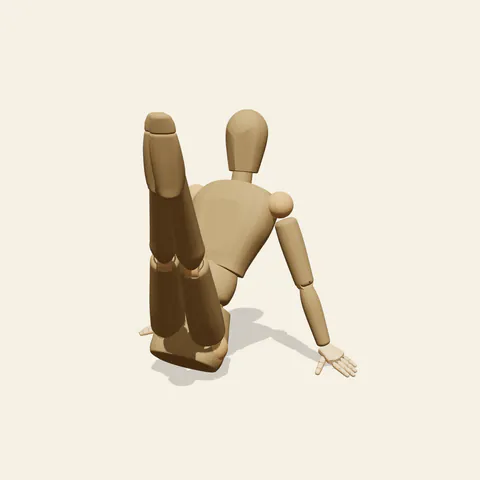
three-quarter view 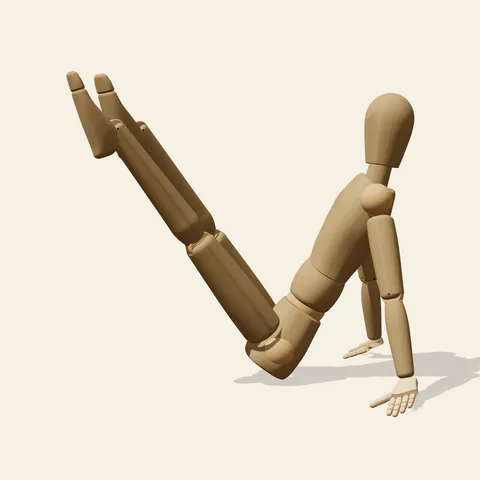
side view 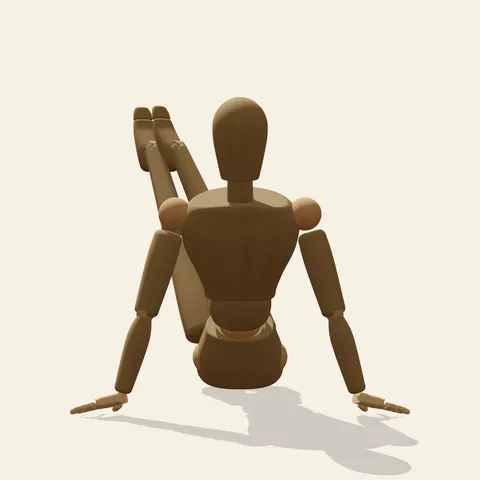
back view 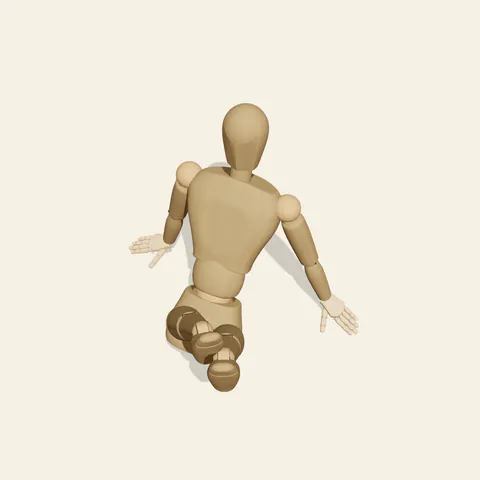
high-angle view
The pivot is the back of the pelvis. From there the torso leans back at a moderate slant and the legs rise forward at roughly fifty degrees, pressed together with the feet pointed, so the body folds into a clean V. Because the arms angle down behind the hips with the palms flat, they take a good share of the load; this is the assisted v sit pose, not the hands-free core hold. The head stays forward of the shoulders, chin level, eyes aimed past the tips of the feet.
The side view, seen from the figure's left, is the one that explains everything: two straight lines meeting at the hips, plus the strut of the near arm. Every other angle hides part of it. From the front, the raised legs foreshorten and cover the belly, and the feet climb almost to head height. The low angle stacks the legs nearly vertical in front of the chest. Above, the high angle shrinks them to a pair of soles hovering over the pelvis, while the back view turns the arms into a wide base with the feet peeking over one shoulder.
More on angles and common mistakes
Watch the knees first. Any bend turns the V into a tuck and changes the whole exercise. Keep the legs touching; a gap between them reads as a different straddle shape. Do not lay the pelvis flat as if the figure were lying down, and do not set the torso fully upright, since a vertical back with lifted legs needs more than two hands on the floor to stay plausible.
Artists use this shape for gymnastics and pilates illustration, a dancer's floor sequence, a playful moment on a pool deck or a cheerful splash panel; the floor itself only appears through the shadow. Edit this pose: lift both hands and reach the arms forward alongside the legs, then tip the torso back a few more degrees so the unsupported balance still reads as stable.
Free to use (CC0). The pose images on this page are released under CC0 1.0 (public domain dedication). Use them for drawing practice, commercial illustration, reference sheets or AI image generation; no attribution is required. A credit to PoseMaker is appreciated but optional.
V-Sit, Legs Raised pose prompt
Copy a prompt for your AI image generator. Pair it with the OpenPose skeleton in ControlNet so the generated character matches this exact pose.
General prompt
A person balances on the seat with the torso leaning back and both straight legs lifted together, forming a V shape. Arms reach behind with palms flat on the floor beside the hips, toes pointed, head up and gaze past the raised feet. Plain background.
Midjourney
full body person in a v-sit, balancing on seat, both straight legs raised together, pointed toes, torso leaning back, palms on floor behind hips, head up, athletic floor pose, plain background --ar 3:2 --style raw
Stable Diffusion
1person, full body, v-sit, sitting, legs up, straight legs, legs together, pointed toes, leaning back, arms behind, hands on floor, balance, core exercise, gymnastics, side view, plain background
Negative prompt
bent knees, tucked legs, legs apart, lying flat, upright torso, hands on legs, feet on floor, one leg raised, extra legs, extra arms, extra fingers, bad anatomy, cropped feet
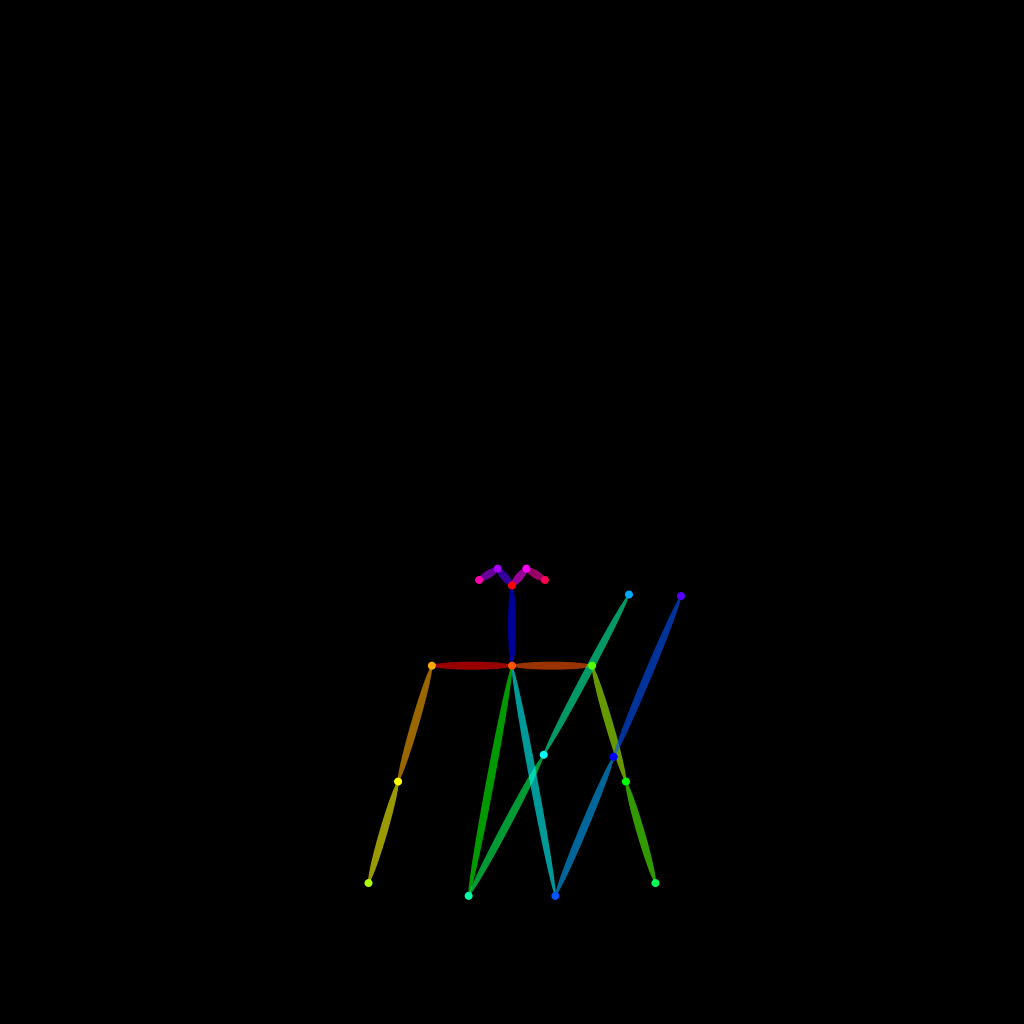
OpenPose skeleton for ControlNet
Load the PNG into a ControlNet OpenPose unit (preprocessor: none), or import the JSON into an OpenPose editor.
Have a photo of the pose you want?
Upload it to Photo to Pose. We detect the pose in your browser and put it on the mannequin, ready to adjust.