Arms Raised OverheadPose Reference
Camera angles
Arms Raised Overhead stretches a standing figure into one tall line: feet hip-width apart, both arms straight up and parallel, palms forward.
Tags: standingfigure drawingfull bodyarms upstretching
How to draw the Arms Raised Overhead pose
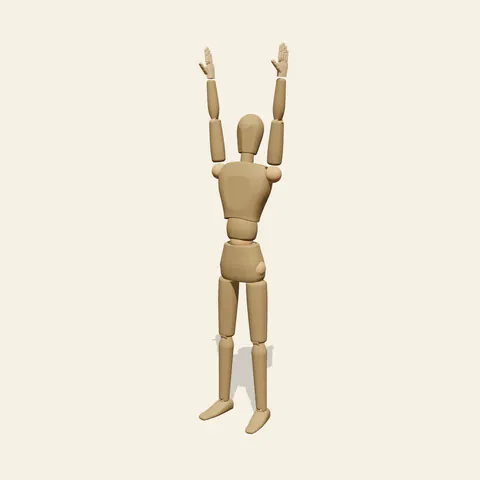
three-quarter view 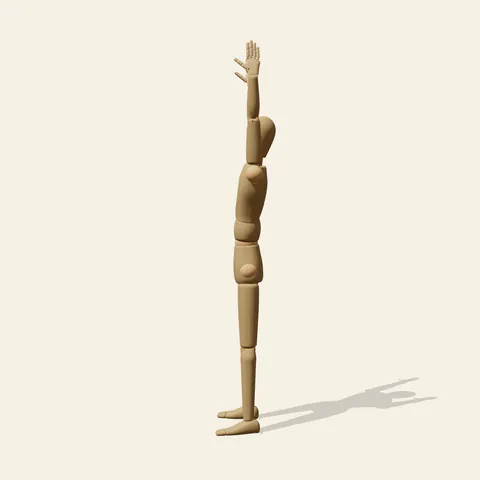
side view 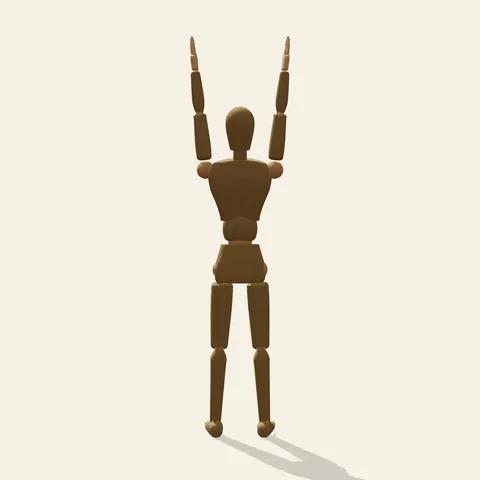
back view 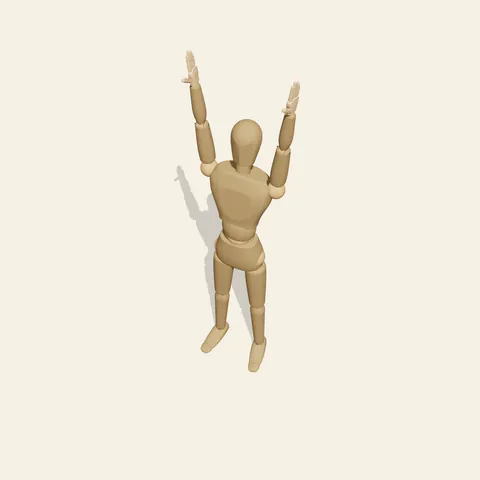
high-angle view
Nothing bends at the knees or elbows; length is the subject. The feet point slightly outward and share the load, the pelvis tips forward a few degrees, and the lumbar spine arches so the ribcage lifts toward the hands. Both arms leave the shoulders and rise vertically, keeping a constant gap between them, with open hands and the palms turned toward the viewer. The chin lifts just slightly, which keeps the face between the upper arms instead of behind them. From the heels to the fingertips the body traces a shallow curve that bows forward at the belly.
That curve is the reason to study this arms up pose from the side. In the side view from the figure's left, the arm covers the ear and part of the head, the chest sits ahead of the hips, and the lower back shows its hollow; the rest of the views can make the figure look ruler-straight. The front and back views are nearly symmetrical, so use them to check that both hands end at the same height and both feet sit equally wide. The high angle foreshortens the arms toward you and shrinks the legs; the low angle does the opposite, making the hands feel very far away. On a living person the shoulder blades rotate upward and the trapezius bunches beside the neck; the wooden figure only hints at that, so add it yourself.
More on angles and common mistakes
The classic mistake is to start the arms from the top of the shoulders as if they were plugged into the neck. They begin at the outer shoulder and travel up along the sides of the head. Another is letting them splay outward, which belongs to a V pose. Elbows that soften even slightly also lose the stretch, and an over-arched back makes the pose read as a backbend.
Use it for a morning stretch, a winner's moment at a finish line, a dancer's preparation or a character reaching for something on a shelf that is not shown. In Edit this pose, rotate both forearms so the palms face each other; the gesture shifts from presentation to plain stretching. Raising one heel adds a casual note without breaking the vertical.
Free to use (CC0). The pose images on this page are released under CC0 1.0 (public domain dedication). Use them for drawing practice, commercial illustration, reference sheets or AI image generation; no attribution is required. A credit to PoseMaker is appreciated but optional.
Arms Raised Overhead pose prompt
Copy a prompt for your AI image generator. Pair it with the OpenPose skeleton in ControlNet so the generated character matches this exact pose.
General prompt
A person stands tall with feet hip-width apart and legs straight, both arms raised straight overhead and parallel, palms facing forward with open hands. The ribcage lifts and the lower back arches slightly, chin a little up, forming a long gentle curve from heels to fingertips. Plain background.
Midjourney
full body person standing, feet hip-width, both arms straight up overhead, parallel arms, open palms facing forward, lifted ribcage, slight back arch, chin slightly up, long vertical stretch, plain background --ar 2:3 --style raw
Stable Diffusion
1person, full body, standing, arms up, arms raised, both arms overhead, straight arms, parallel arms, open hands, palms forward, stretching, slight back arch, straight legs, feet apart, side view, plain background
Negative prompt
v-shaped arms, bent elbows, hands together, clasped hands, arms behind head, deep backbend, bent knees, tiptoe, leaning sideways, extra arms, extra fingers, bad anatomy, cropped hands, cropped feet
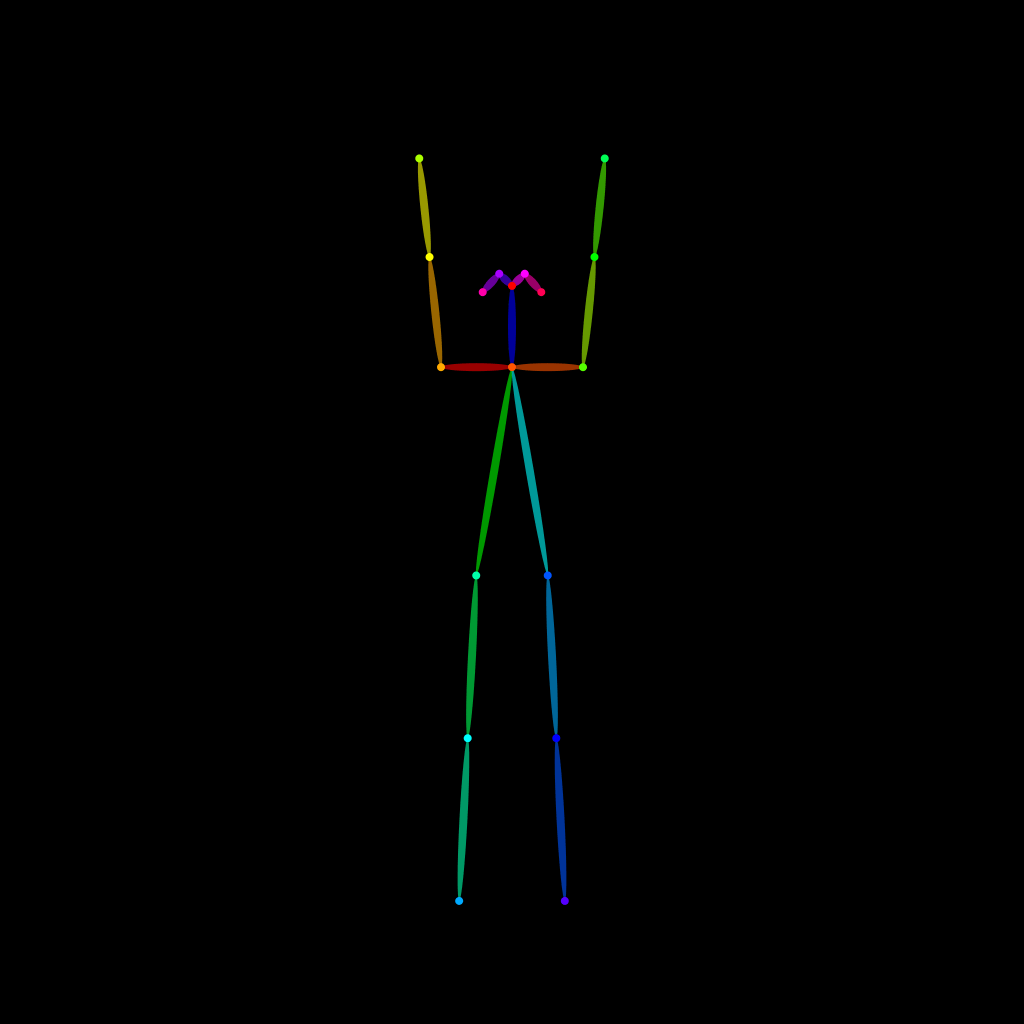
OpenPose skeleton for ControlNet
Load the PNG into a ControlNet OpenPose unit (preprocessor: none), or import the JSON into an OpenPose editor.
Have a photo of the pose you want?
Upload it to Photo to Pose. We detect the pose in your browser and put it on the mannequin, ready to adjust.