Tiptoe, Arms in a VPose Reference
Camera angles
Tiptoe, Arms in a V lifts the figure high onto the balls of both feet, legs straight and close, arms flung up and out in a wide open V.
Tags: standingfigure drawingfull bodytiptoearms up
How to draw the Tiptoe, Arms in a V pose
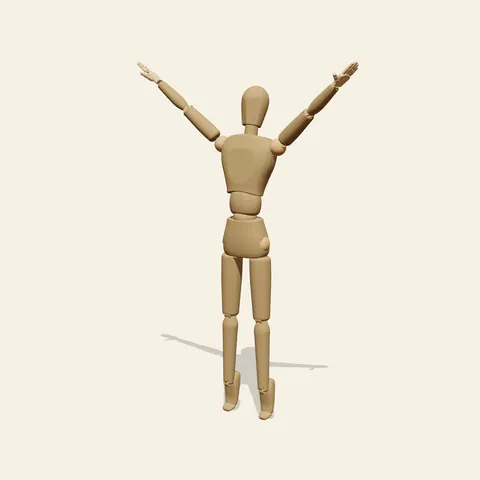
three-quarter view 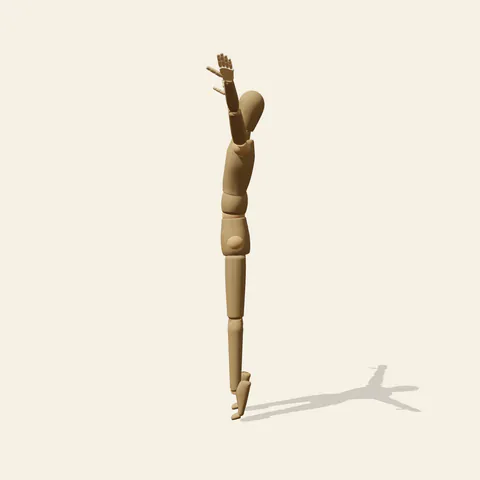
side view 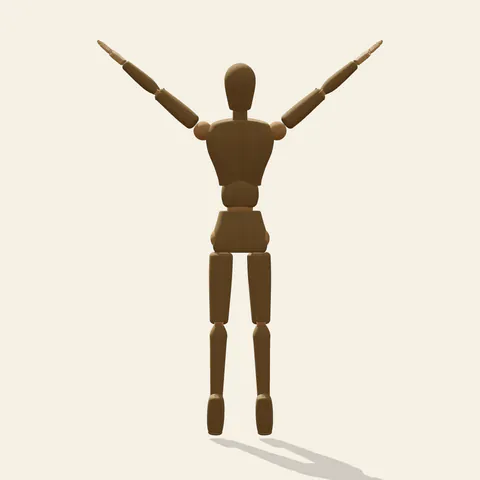
back view 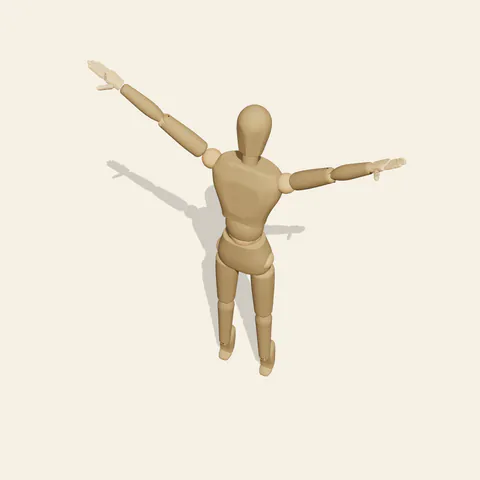
high-angle view
The heels leave the floor and the ankles extend fully, so the whole body rides on the toe joints and gains several centimetres of height. Both legs stay straight and nearly touching, a narrow stem under everything else. From the pelvis up the spine arches back a little and the chest rises, while the arms shoot diagonally upward from the shoulders, straight at the elbows, with the hands open and fingers spread. The head tips back slightly so the face catches the light from above. The shape resembles a letter Y: a thin column for the legs and torso, and two long branches spreading above it.
For a tiptoe arms up figure, the base is the hardest part. The side view from the figure's left shows the heel high, the foot nearly vertical and the gentle backward curve of the body; it is the best view for building the ankle. The front and back views reveal the V symmetry and how close the knees stay together. The high angle compresses the legs and makes the arms seem to reach toward the viewer, while the low angle stretches the legs and makes the tiny foot contact look precarious. In every view check that the hands spread just as wide as they rise.
More on angles and common mistakes
Drawing the heels on the floor kills the lift immediately, even if the arms are perfect. So does bending the knees, which turns the rise into a crouch before a jump. Arms that drift toward vertical lose the V and start to resemble a straight overhead stretch; arms that drop to shoulder height read as a balancing act. A wooden figure rests easily on its toes, but a real person would show tight calves and a slight wobble, so a little asymmetry in the hands keeps it lively.
This is the shape of celebration: a finish-line win, a concert crowd moment, greeting the sunrise on an imagined hilltop or the end of a dance routine. Since it is a balance, it also makes a good gesture-drawing warm-up. Open Edit this pose and bend one knee forward, lifting that foot slightly off the floor; the figure starts to read like the last instant before a joyful jump.
Free to use (CC0). The pose images on this page are released under CC0 1.0 (public domain dedication). Use them for drawing practice, commercial illustration, reference sheets or AI image generation; no attribution is required. A credit to PoseMaker is appreciated but optional.
Tiptoe, Arms in a V pose prompt
Copy a prompt for your AI image generator. Pair it with the OpenPose skeleton in ControlNet so the generated character matches this exact pose.
General prompt
A person rises high on the balls of both feet, heels lifted, legs straight and close together. Both arms are flung up and out in a wide V with open hands and spread fingers; the chest lifts, the back arches slightly and the head tips up in joy. Plain background.
Midjourney
full body person standing on tiptoe, heels raised, legs straight and together, both arms up and out in a wide V, open hands, spread fingers, lifted chest, slight back arch, head tipped up, joyful celebration, plain background --ar 2:3 --style raw
Stable Diffusion
1person, full body, standing, tiptoe, on tiptoes, heels up, legs together, arms up, v arms, spread arms, outstretched arms, open hands, spread fingers, arched back, head up, joyful, celebration, front view, plain background
Negative prompt
heels on floor, bent knees, jumping, feet apart, arms straight up parallel, arms at shoulder height, bent elbows, fists, leaning forward, extra arms, extra fingers, bad anatomy, cropped hands, cropped feet
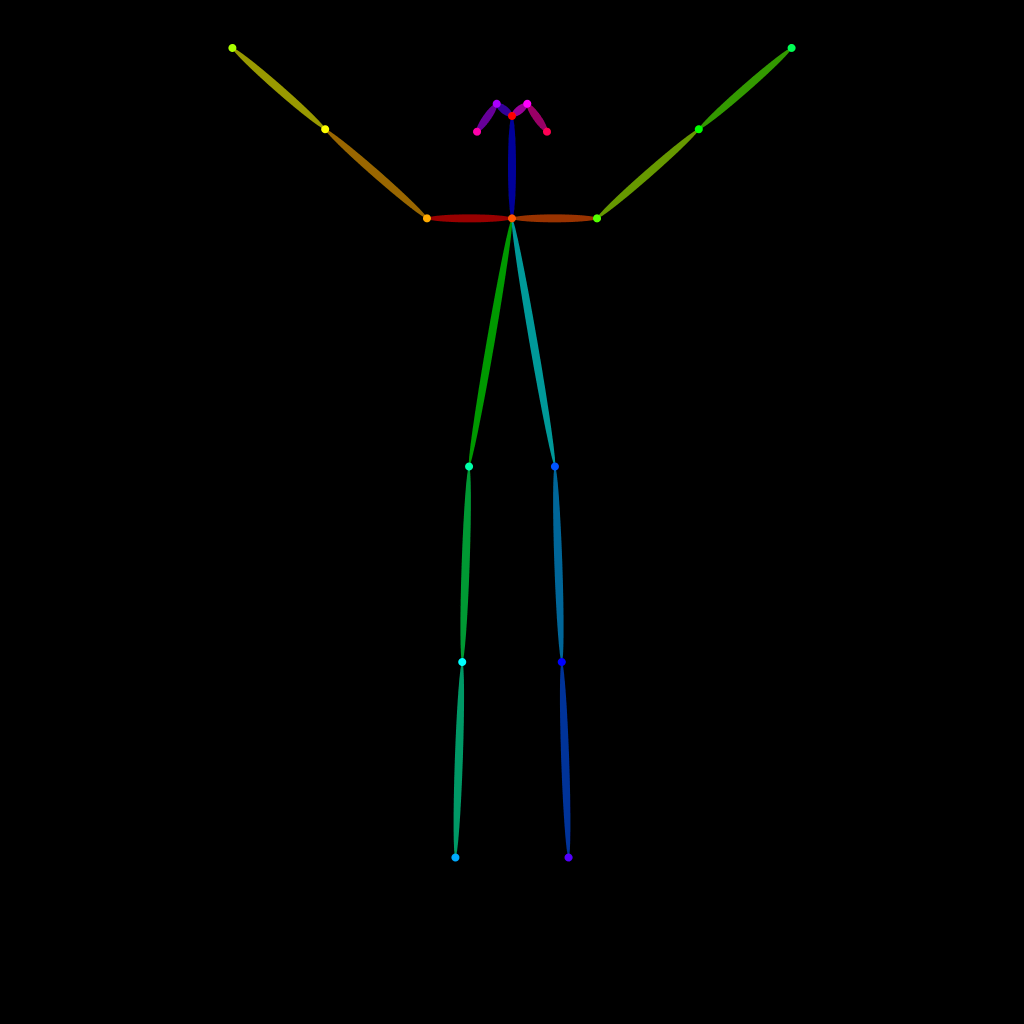
OpenPose skeleton for ControlNet
Load the PNG into a ControlNet OpenPose unit (preprocessor: none), or import the JSON into an OpenPose editor.
Have a photo of the pose you want?
Upload it to Photo to Pose. We detect the pose in your browser and put it on the mannequin, ready to adjust.