Shoulder Stand, V LegsPose Reference
Camera angles
A shoulder stand with the legs opened into a wide V: the wooden figure balances upside down on its upper back while both hands brace the lower spine.
Tags: yogashoulder standinversionlegs apartfloor
How to draw the Shoulder Stand, V Legs pose
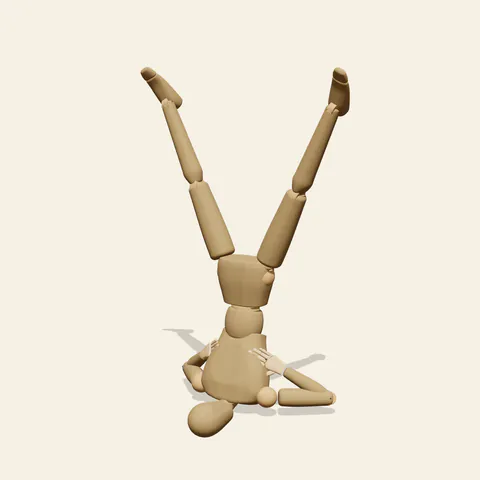
three-quarter view 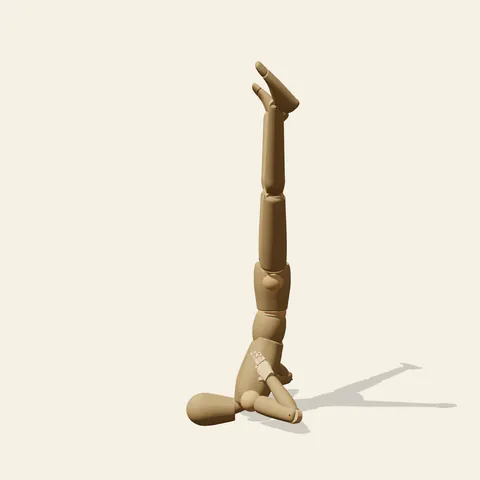
side view 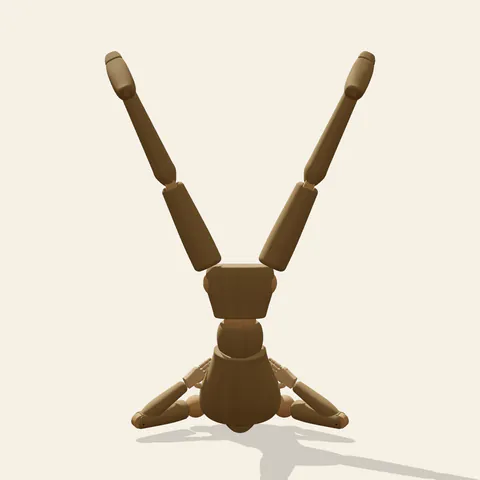
back view 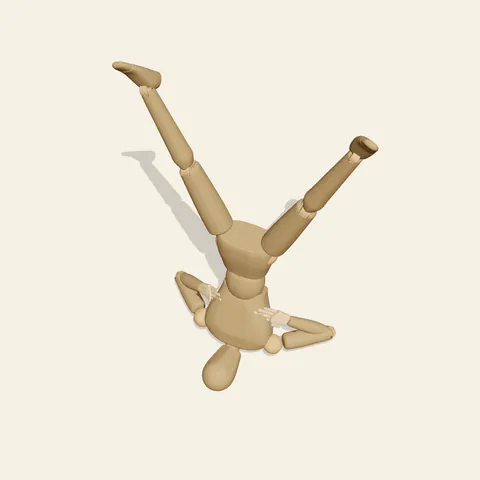
high-angle view
The weight rests on the shoulders, the upper arms and the back of the head, which lies on the floor with the chin tucked toward the chest. From there the torso rises vertically, and the hips sit directly above the shoulders. The elbows stay on the floor and bend so that both hands press into the lower back, forming a short bracket that keeps the trunk upright. Above the pelvis the straight legs separate into a wide, symmetrical V, toes pointed. The head is at floor level, about 1 cm up, and the centre of mass sits around 48 cm high, inside the column of the torso. In yoga this is a variation of supported shoulder stand, Salamba Sarvangasana.
Front and back views show the V clearly and let you compare both legs for equal length. In the side view from the figure's left the legs overlap into one vertical line, so the shoulder stand pose looks like the classic closed-leg version; it is the best angle for checking that the torso is vertical and the neck folds at a right angle. The high angle looks down at the soles and foreshortens the legs heavily, while the low angle puts the folded arms and head in the foreground.
More on angles and common mistakes
A common mistake is tilting the torso so far that the figure becomes a lying leg raise or a plow. Another is drawing the hands at mid-back with no elbow on the floor, which leaves the brace floating. Keep the head flat and avoid twisting the neck; both shoulders should touch the ground evenly. Nothing beneath the figure is rendered, so sketch the mat or floor plane where shoulders and elbows press down.
Use it for yoga sequences, gymnastics practice, playful upside-down scenes and breakdance freeze studies. In Edit this pose, close the legs into a single vertical line for the standard version, or lower them toward the floor behind the head to move into plow pose.
Free to use (CC0). The pose images on this page are released under CC0 1.0 (public domain dedication). Use them for drawing practice, commercial illustration, reference sheets or AI image generation; no attribution is required. A credit to PoseMaker is appreciated but optional.
Shoulder Stand, V Legs pose prompt
Copy a prompt for your AI image generator. Pair it with the OpenPose skeleton in ControlNet so the generated character matches this exact pose.
General prompt
A person in a yoga shoulder stand, upside down on the shoulders with the torso vertical, straight legs opened into a wide V with pointed toes, elbows on the floor and hands supporting the lower back, head on the floor with chin toward the chest. Full body, plain background.
Midjourney
full body person in shoulder stand, inverted on shoulders, vertical torso, straight legs spread in a wide V, pointed toes, hands supporting lower back, elbows on floor, chin to chest, yoga, plain background --ar 2:3 --style raw
Stable Diffusion
1person, full body, shoulder stand, inversion, upside down, legs apart, v legs, straight legs, pointed toes, hands on lower back, elbows on floor, vertical torso, yoga, flexibility, front view, plain background
Negative prompt
plow pose, tilted torso, bent knees, hands floating, head lifted, twisted neck, headstand, extra legs, missing arms, uneven legs, fused fingers, distorted feet, cropped toes, nsfw
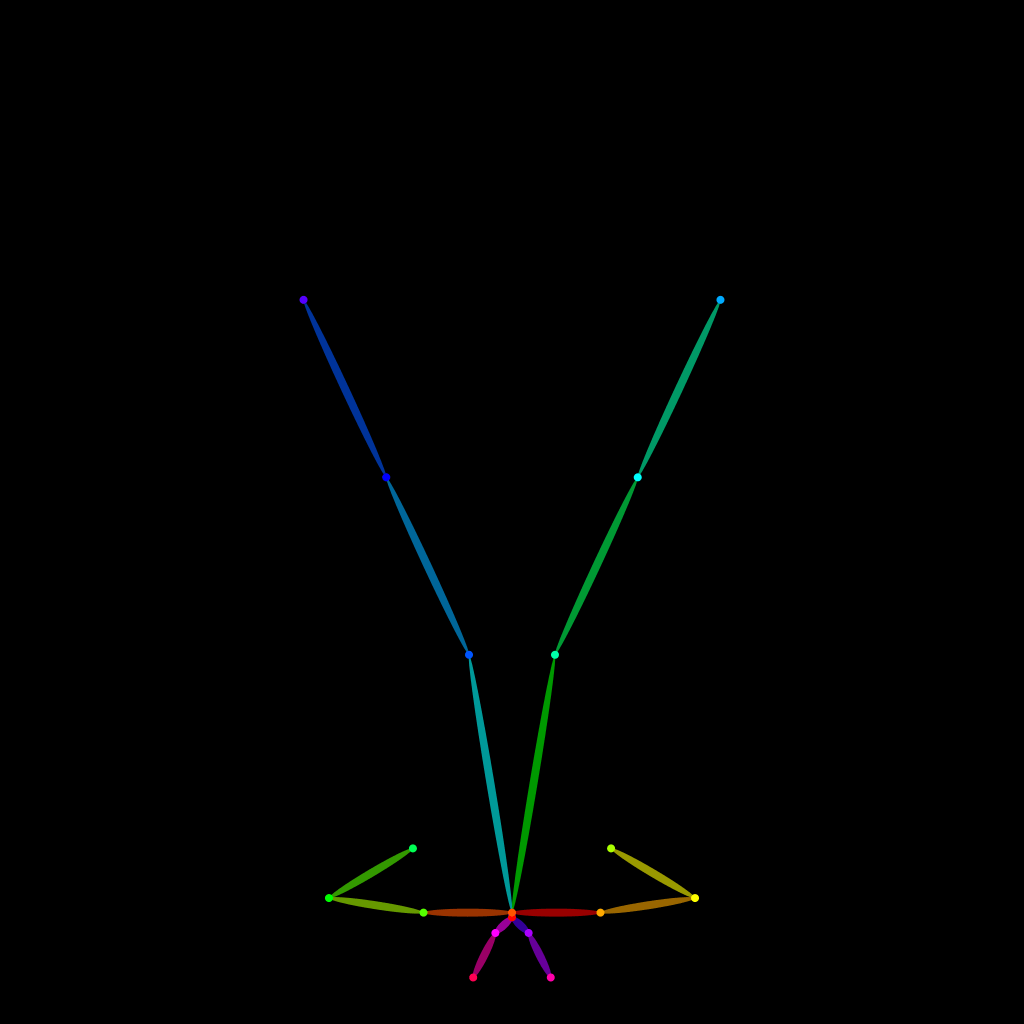
OpenPose skeleton for ControlNet
Load the PNG into a ControlNet OpenPose unit (preprocessor: none), or import the JSON into an OpenPose editor.
Have a photo of the pose you want?
Upload it to Photo to Pose. We detect the pose in your browser and put it on the mannequin, ready to adjust.