Standing Forward BendPose Reference
Camera angles
Standing Forward Bend folds the wooden torso toward the legs, with a lowered head and long arms reaching down near the feet.
Tags: yogafigure drawingfull bodystandingforward bend
How to draw the Standing Forward Bend pose
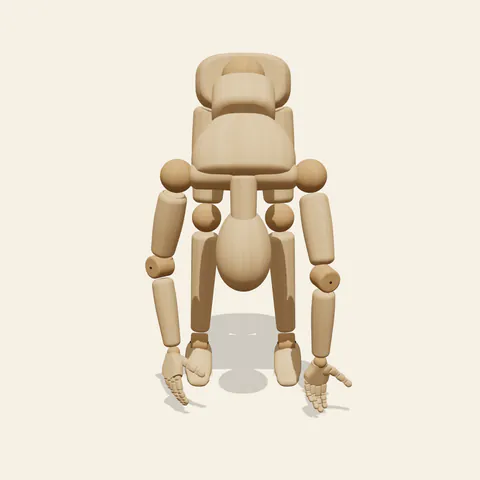
three-quarter view 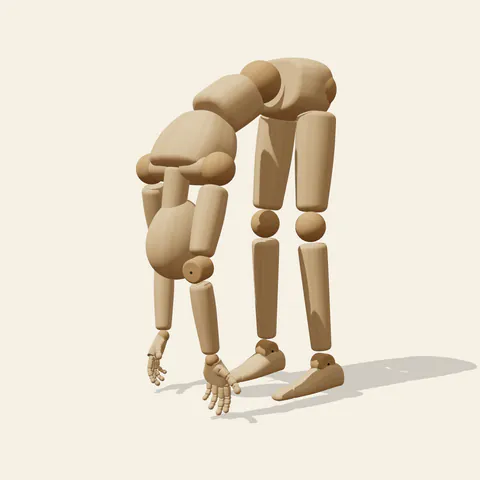
side view 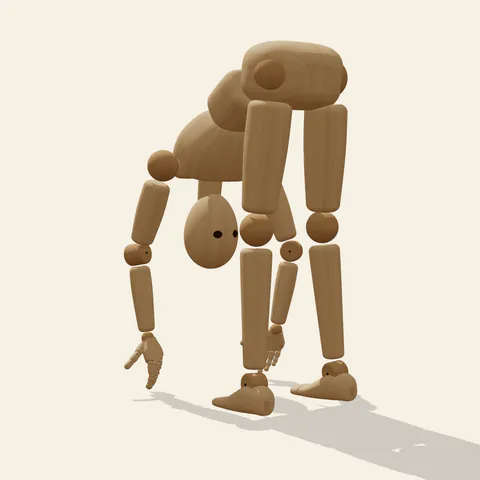
back view 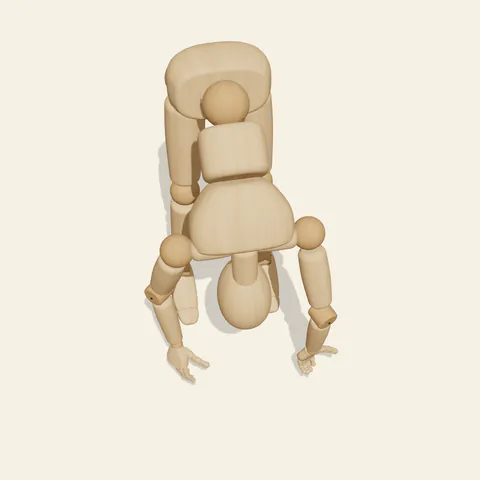
high-angle view
The hips remain the highest major landmark as the chest turns downward. The torso curves over the front of the thighs, the head hangs below the shoulders, and both arms extend toward the ground. Unlike a hands-on-knees lean, this gesture does not stop the descent at thigh height. The legs stay comparatively long, with only the bend needed to make the folded arrangement readable. Observe the silhouette as an inverted arch: the back rises into the pelvis, then the body doubles downward toward the hanging hands. The arms should follow gravity rather than reach stiffly away from the shins.
A profile is the clearest starting point for construction because it exposes the hip hinge and the separation between torso and legs. Mark the pelvis, knees and ankles first, then fit the descending rib cage in front of them. From a frontal angle, check that the two forearms remain individually traceable rather than becoming a single central bar. A rear view reveals the relationship between the feet and the width of the pelvis. The wooden rig simplifies both spinal curvature and hand contact, so its groundward palms are an approximate drawing arrangement, not evidence of a specific human flexibility range or a promised fingertips-to-floor measurement.
More on angles and common mistakes
Avoid lengthening the arms just to force the hands lower. If the reach seems implausible, revisit the chest angle and shoulder positions instead. Another common mistake is leaving the head upright, which changes the fold into a forward-looking lean. This reference works for dropped-object scenes, quiet hanging gestures and studies of how the torso overlaps the thighs. Use Edit this pose to bend both knees slightly more while keeping the head lowered. The hips can then sit closer to the feet and the fold feels less elongated. Check the side silhouette after editing so the added knee bend does not accidentally become a deep squat.
Free to use (CC0). The pose images on this page are released under CC0 1.0 (public domain dedication). Use them for drawing practice, commercial illustration, reference sheets or AI image generation; no attribution is required. A credit to PoseMaker is appreciated but optional.
Standing Forward Bend pose prompt
Copy a prompt for your AI image generator. Pair it with the OpenPose skeleton in ControlNet so the generated character matches this exact pose.
General prompt
Show a person standing in a deep forward bend, hips high and torso folded toward the legs. Let the head hang downward and both arms reach near the feet, with the legs relatively long. Include the entire figure against a plain backdrop.
Midjourney
full body person folded forward, high hips, downward torso, head hanging below shoulders, long arms reaching toward feet, mostly extended legs, clear side silhouette, plain neutral background --ar 2:3 --style raw
Stable Diffusion
1person, full body, standing forward bend, folded torso, high pelvis, lowered head, hanging arms, hands near feet, long legs, slight knee bend, side view, hip hinge, visible fingers, grounded feet, plain background, inverted curve, figure reference
Negative prompt
head looking forward, hands on knees, deep squat, upright chest, stretched arms, wrists through feet, extra shoulders, missing head, broken spine, reversed knees, cropped fingers, exercise props
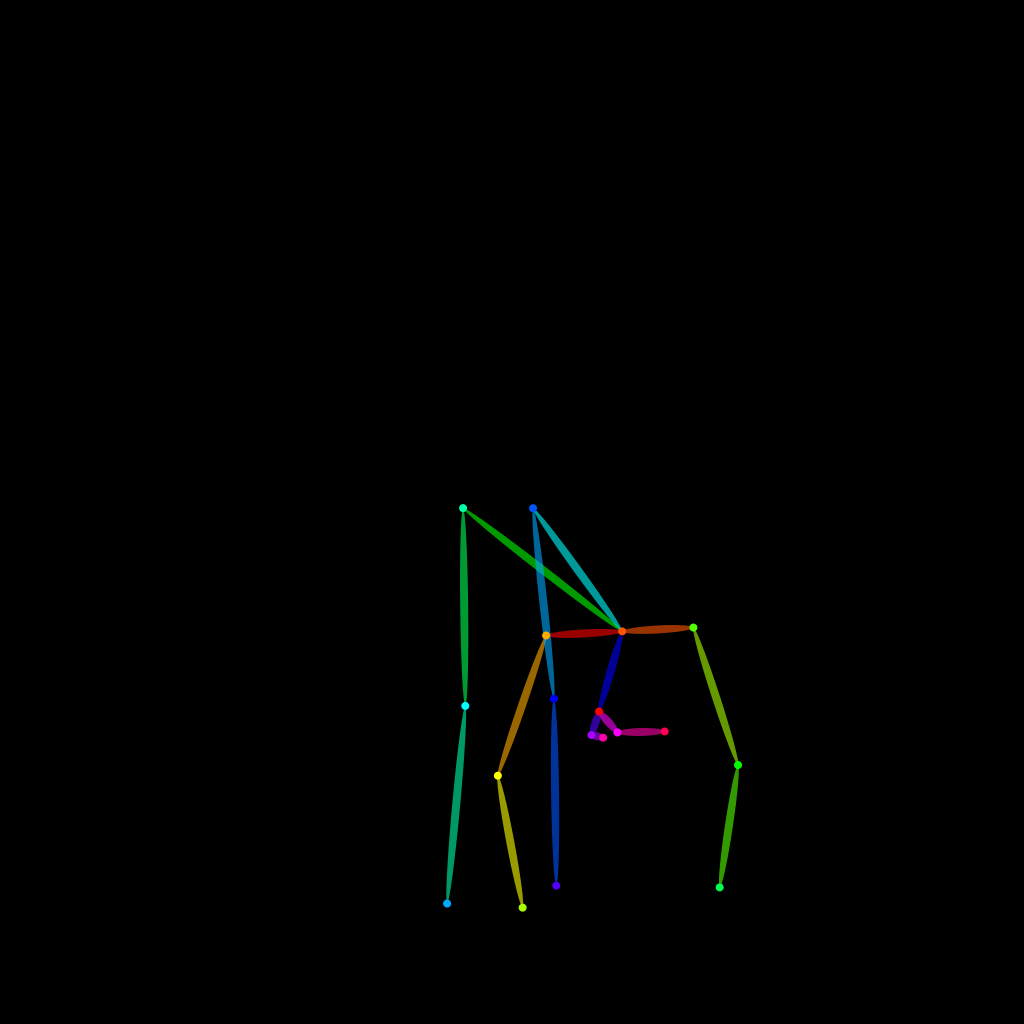
OpenPose skeleton for ControlNet
Load the PNG into a ControlNet OpenPose unit (preprocessor: none), or import the JSON into an OpenPose editor.
Have a photo of the pose you want?
Upload it to Photo to Pose. We detect the pose in your browser and put it on the mannequin, ready to adjust.