Sitting, One Knee UpPose Reference
Camera angles
Sitting One Knee Up gives the wooden mannequin an uneven seated outline, with one folded leg low and the other knee lifted beside the torso.
Tags: sittingfigure drawingfull bodyone knee up
How to draw the Sitting, One Knee Up pose
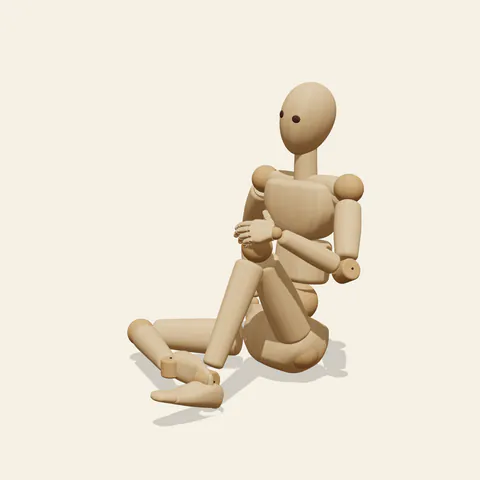
three-quarter view 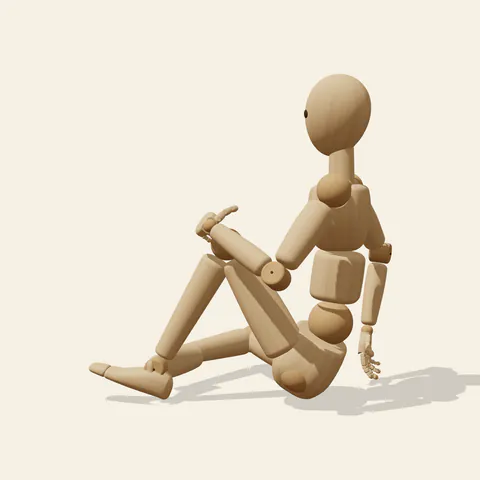
side view 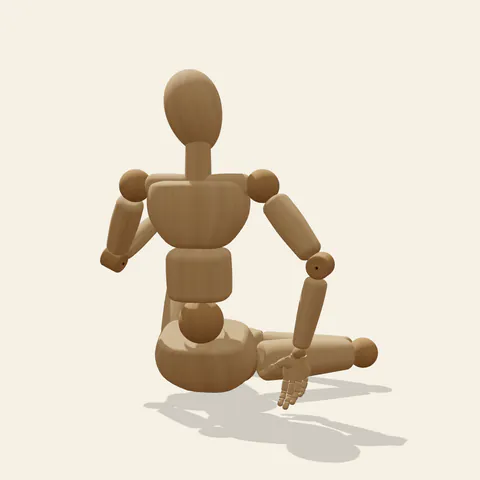
back view 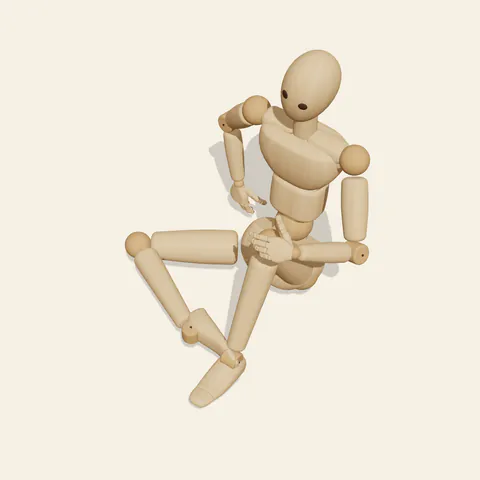
high-angle view
A raised knee provides the main vertical accent on one side of this otherwise low pose. The opposite leg folds closer to the ground, widening the base without repeating the same shape. One hand reaches down beside or slightly behind the pelvis, while the other arm bends toward the lifted knee. The torso tilts into this arrangement rather than stacking stiffly over the hips. Trace the head and shoulder angle against the slope of the raised thigh: their counterdirection gives the seated figure a relaxed, conversational quality without needing any facial expression or surrounding furniture.
Work outward from the pelvis when constructing the legs. Mark the lifted knee first, then follow its shin to the foot instead of assuming that foot lies directly below it in every view. The lower folded leg needs its own continuous route through hip, knee and ankle. A front three quarter angle exposes these different paths. A side view is valuable for understanding the groundward hand and the backward lean it permits. The wooden model simplifies the palms and feet, so their contacts indicate placement rather than exact pressure on a visible surface. No chair or cushion is supplied by the reference.
More on angles and common mistakes
Watch for a raised thigh that appears detached because the pelvis has been hidden behind the knee. Preserve enough of its root to explain the connection. Similarly, do not flatten the grounded forearm into the torso contour. This reference suits casual pauses, seated portrait blocking and studies of unequal leg heights. Open Edit this pose and turn the head slightly toward the raised knee, leaving the chest tilt unchanged. That produces a more inward focus while retaining the original support arrangement. Finally check the rear angle to see whether the low hand still clears the hip and remains readable as a separate end of the arm.
Free to use (CC0). The pose images on this page are released under CC0 1.0 (public domain dedication). Use them for drawing practice, commercial illustration, reference sheets or AI image generation; no attribution is required. A credit to PoseMaker is appreciated but optional.
Sitting, One Knee Up pose prompt
Copy a prompt for your AI image generator. Pair it with the OpenPose skeleton in ControlNet so the generated character matches this exact pose.
General prompt
Depict a seated person with one knee raised and the other leg folded low across the ground. One hand braces beside the hip; the other arm rests toward the raised knee. Tilt the head gently and keep the full body visible against a plain backdrop.
Midjourney
full body sitting person, one knee lifted, opposite leg folded low, hand beside hip, other forearm near raised knee, gently leaning torso, tilted head, asymmetrical seated silhouette, empty background --ar 3:2 --style raw
Stable Diffusion
1person, full body, sitting, one knee up, one leg folded, grounded hand, hand near hip, arm near knee, tilted torso, angled head, front three quarter view, visible feet, floor pose, asymmetric legs, plain background, relaxed posture, clear joints
Negative prompt
both knees raised, symmetrical crossed legs, floating support hand, detached raised thigh, shin through folded leg, reversed foot, extra arms, missing knees, fused wrist, distorted pelvis, cropped body, chair
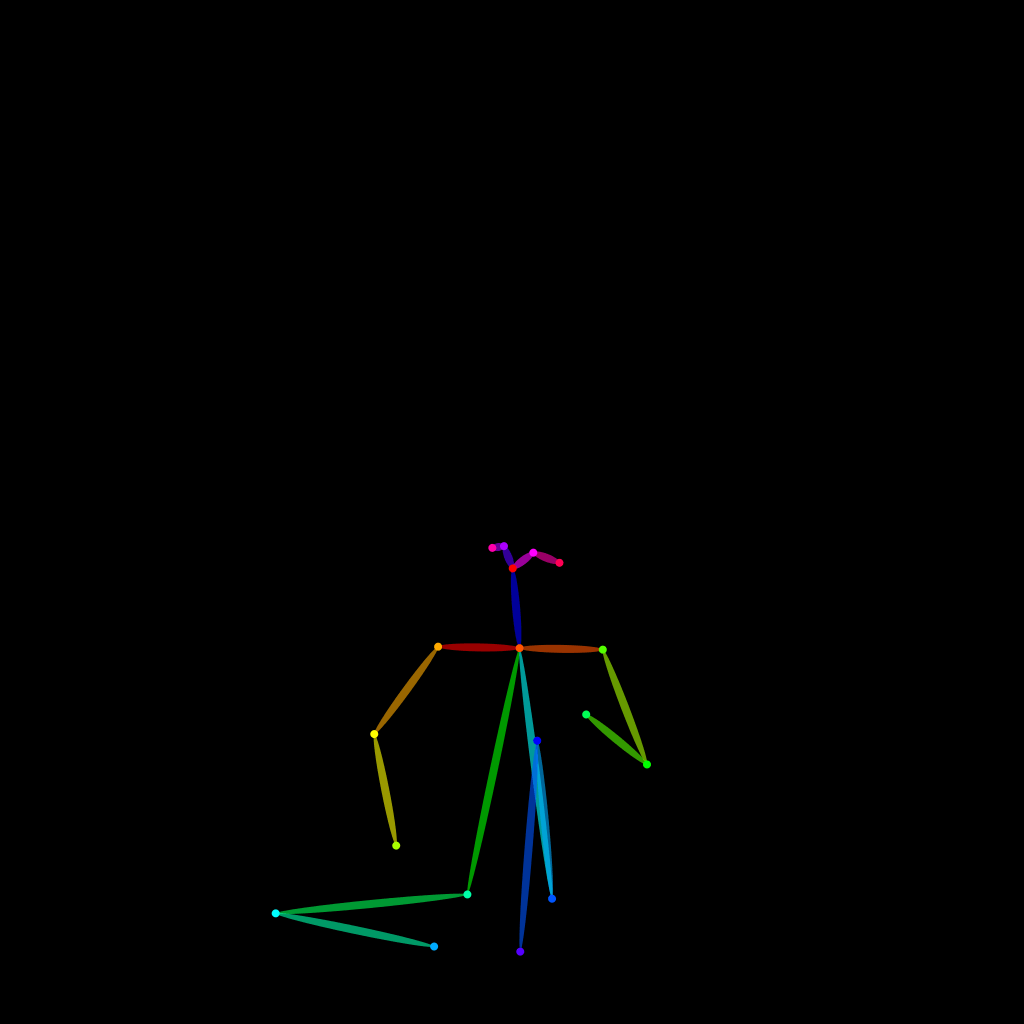
OpenPose skeleton for ControlNet
Load the PNG into a ControlNet OpenPose unit (preprocessor: none), or import the JSON into an OpenPose editor.
Have a photo of the pose you want?
Upload it to Photo to Pose. We detect the pose in your browser and put it on the mannequin, ready to adjust.