Side SittingPose Reference
Camera angles
Side Sitting folds the wooden figure's legs together toward one side, while low supporting arms keep the tilted torso distinct from the lap.
Tags: sittingfigure drawingfull bodyside sitting
How to draw the Side Sitting pose
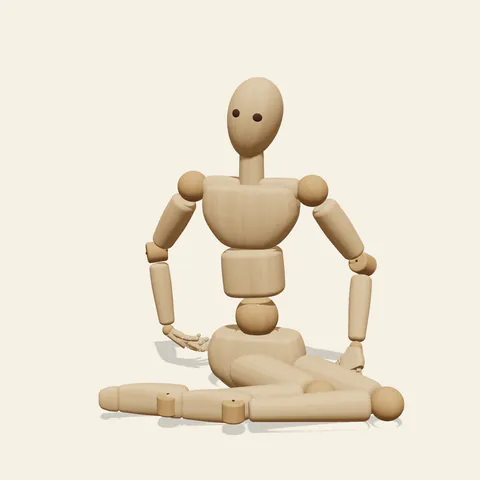
three-quarter view 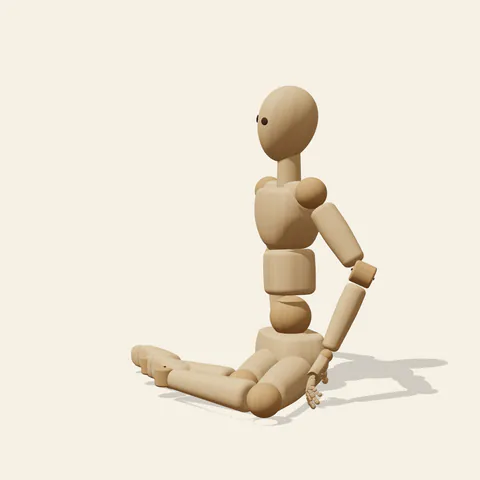
side view 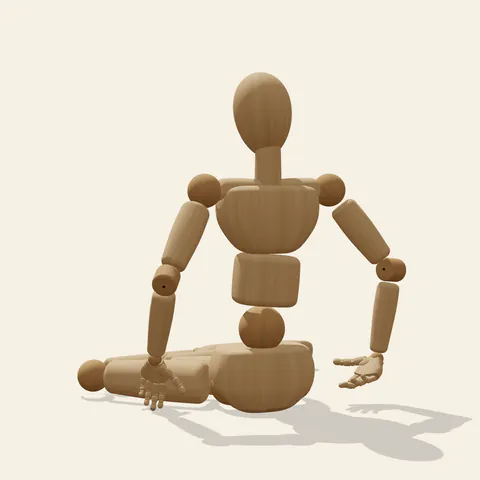
back view 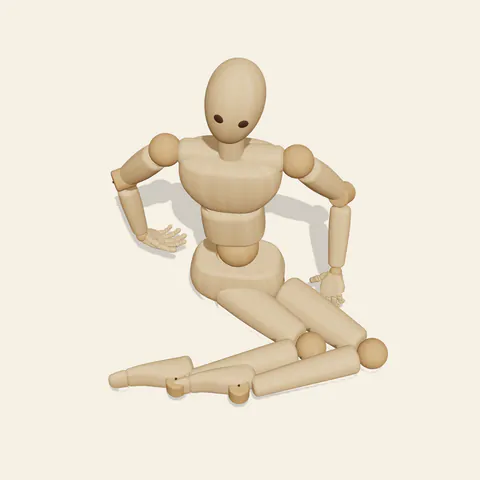
high-angle view
Both knees and feet travel to the same side of the pelvis, creating a sweeping low extension rather than a centered crossed-leg seat. The torso rises above the opposite side of that shape, with a gentle tilt through the shoulders and head. The hands lower beside the hips, giving the upper figure an open connection to the ground. Notice the contrast between the compact pelvis and the long stacked outline of the folded legs. That contrast matters more than making every joint perfectly visible; some overlap is essential to the relaxed sideways arrangement.
Before tracing the outside contour, identify the near knee, far knee and two ankle destinations. The hidden leg must still follow a continuous route beneath the visible one. Front three quarter views usually explain this layering well, while a profile separates the backward angle of the arms from the upright chest. A rear angle can clarify where the supporting hands sit relative to the pelvis. The model is a wooden mannequin without clothing or a cushion, so the reference shows a geometric seated construction rather than the soft compression of a person settling onto fabric. Its palms also simplify how weight might spread through the hands.
More on angles and common mistakes
Avoid drawing a single broad shape for both thighs and then attaching unrelated feet at its end. Another error is moving the pelvis toward the feet until the torso appears balanced on a knee instead of seated. This reference is useful for informal floor portraits, composed listening characters and studies of repeated curves across folded limbs. Choose Edit this pose and lift one wrist slightly while keeping its elbow softly bent. Removing that apparent support can make the upper gesture feel lighter. Check the remaining hand and torso tilt together so the pose still reads as an intentional seated balance, then compare the original leg silhouette to ensure it has not drifted into a kneel.
Free to use (CC0). The pose images on this page are released under CC0 1.0 (public domain dedication). Use them for drawing practice, commercial illustration, reference sheets or AI image generation; no attribution is required. A credit to PoseMaker is appreciated but optional.
Side Sitting pose prompt
Copy a prompt for your AI image generator. Pair it with the OpenPose skeleton in ControlNet so the generated character matches this exact pose.
General prompt
Show a person seated with both legs folded toward the same side of the hips. Their hands lower beside the body for support, and the torso and head tilt gently away from the folded feet. Include the complete figure on a plain backdrop.
Midjourney
full body side sitting person, both legs folded to one side, layered knees and ankles, hands beside hips, gently tilted torso, angled head, relaxed floor pose, simple blank background --ar 3:2 --style raw
Stable Diffusion
1person, full body, side sitting, folded legs, knees to one side, stacked lower legs, hands beside hips, supported torso, tilted shoulders, angled head, front three quarter view, floor pose, visible feet, curved silhouette, plain backdrop, relaxed figure, natural joints
Negative prompt
lotus legs, knees split apart, standing pelvis, merged thighs, detached feet, wrists through hips, extra legs, missing hands, twisted ankles, broken elbows, cropped toes, cushion
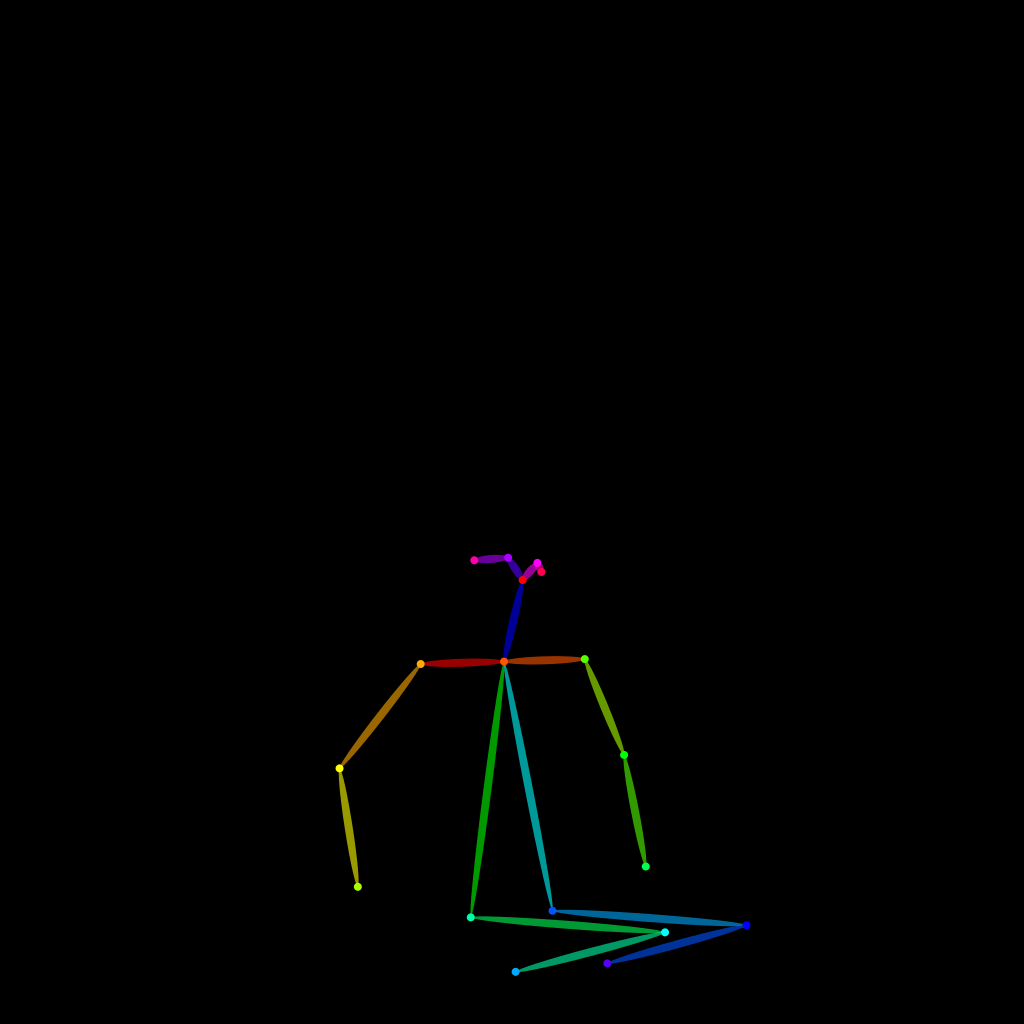
OpenPose skeleton for ControlNet
Load the PNG into a ControlNet OpenPose unit (preprocessor: none), or import the JSON into an OpenPose editor.
Have a photo of the pose you want?
Upload it to Photo to Pose. We detect the pose in your browser and put it on the mannequin, ready to adjust.