Reverse TabletopPose Reference
Camera angles
Reverse Tabletop holds the wooden figure face-up on straight arms and bent legs, hips lifted level with the knees so torso and thighs form a flat table.
Tags: yogareverse tabletophands behindhips raisedknees wide
How to draw the Reverse Tabletop pose
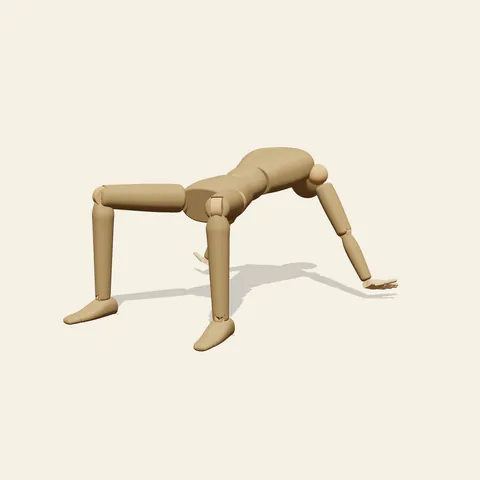
three-quarter view 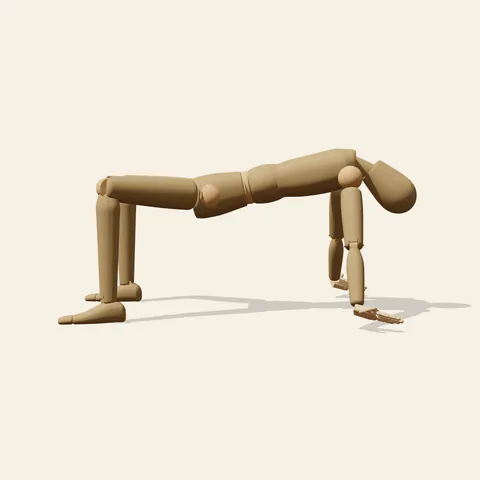
side view 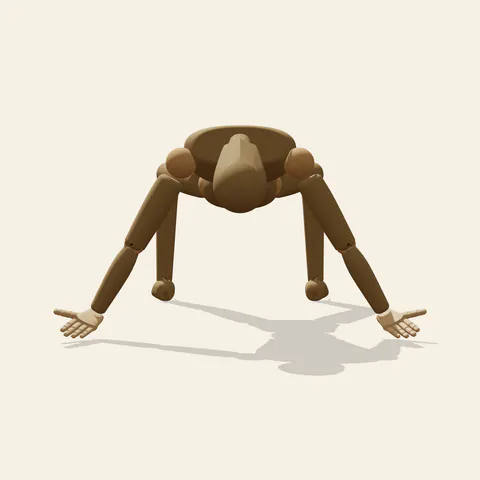
back view 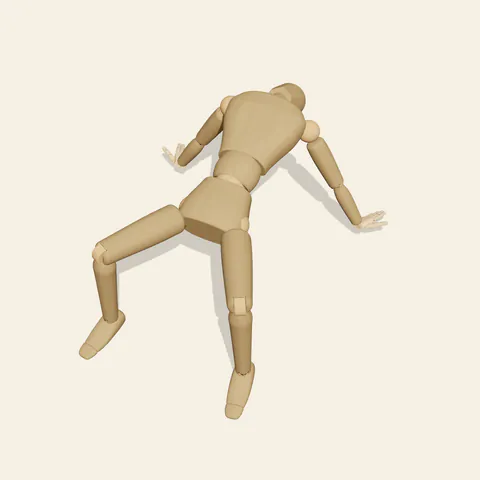
high-angle view
Count the supports: two hands planted a little wider than the shoulders and two feet flat on the floor, set wide apart. The arms are straight and close to vertical, the knees bend at roughly ninety degrees and fall open, and the hips rise until the trunk and thighs make a nearly level shelf from the shoulders to the knees. The head tips back to look up and behind, which lengthens the front of the neck. All four limbs behave like table legs, but they are not equal; the arms are longer and angle a little outward.
The side view from the figure's left gives the plain diagram: a horizontal bar with near-vertical posts at each end. Check that the bar is genuinely level, because a sagging pelvis is the first thing viewers notice. The front view looks between the wide knees at the hips and chest, with the head tipped away almost out of sight. From the back, behind the hands, the arms splay outward and the top of the tipped head sits closest to the camera. The high angle is best for judging the spread of the knees and feet.
More on angles and common mistakes
Avoid bending the elbows, which drops the chest and breaks the tabletop. Fingers can face the feet or turn slightly outward, but keep the wrists under the shoulders rather than far behind them. Don't let the knees collapse inward; the wide opening is part of this version. A reverse tabletop pose drawn with the chin tucked forward reads as a gentler variant, which is fine if you choose it on purpose. The floor is not shown and there is no mat.
This works for yoga and pilates sequences, crab-walk moments in animation, beach and playground scenes, and studies of a body suspended between four points. Edit this pose by straightening the legs and pointing the toes to turn it into a reverse plank, then compare the side views to see the table become a slope.
Free to use (CC0). The pose images on this page are released under CC0 1.0 (public domain dedication). Use them for drawing practice, commercial illustration, reference sheets or AI image generation; no attribution is required. A credit to PoseMaker is appreciated but optional.
Reverse Tabletop pose prompt
Copy a prompt for your AI image generator. Pair it with the OpenPose skeleton in ControlNet so the generated character matches this exact pose.
General prompt
A person in reverse tabletop on a plain floor, facing up: straight arms with hands planted slightly wider than the shoulders, hips lifted to knee height so torso and thighs make a level table, knees bent at right angles and open wide, feet flat, head tipped back looking up.
Midjourney
full body person in reverse tabletop yoga pose, face up, straight arms, hands planted behind, hips lifted level with knees, flat torso and thighs, knees bent at right angle and wide apart, feet flat, head tipped back, side view, plain background --ar 3:2 --style raw
Stable Diffusion
1person, full body, reverse tabletop, yoga, face up, hands on floor, straight arms, hips raised, flat back, knees bent, knees apart, feet on floor, head back, looking up, side view, plain background, simple background, athletic wear, fitness
Negative prompt
sagging hips, bent elbows, straight legs, knees together, head tucked forward, hands far behind, hips too high, extra arms, extra legs, broken wrists, distorted pelvis, cropped feet, nsfw
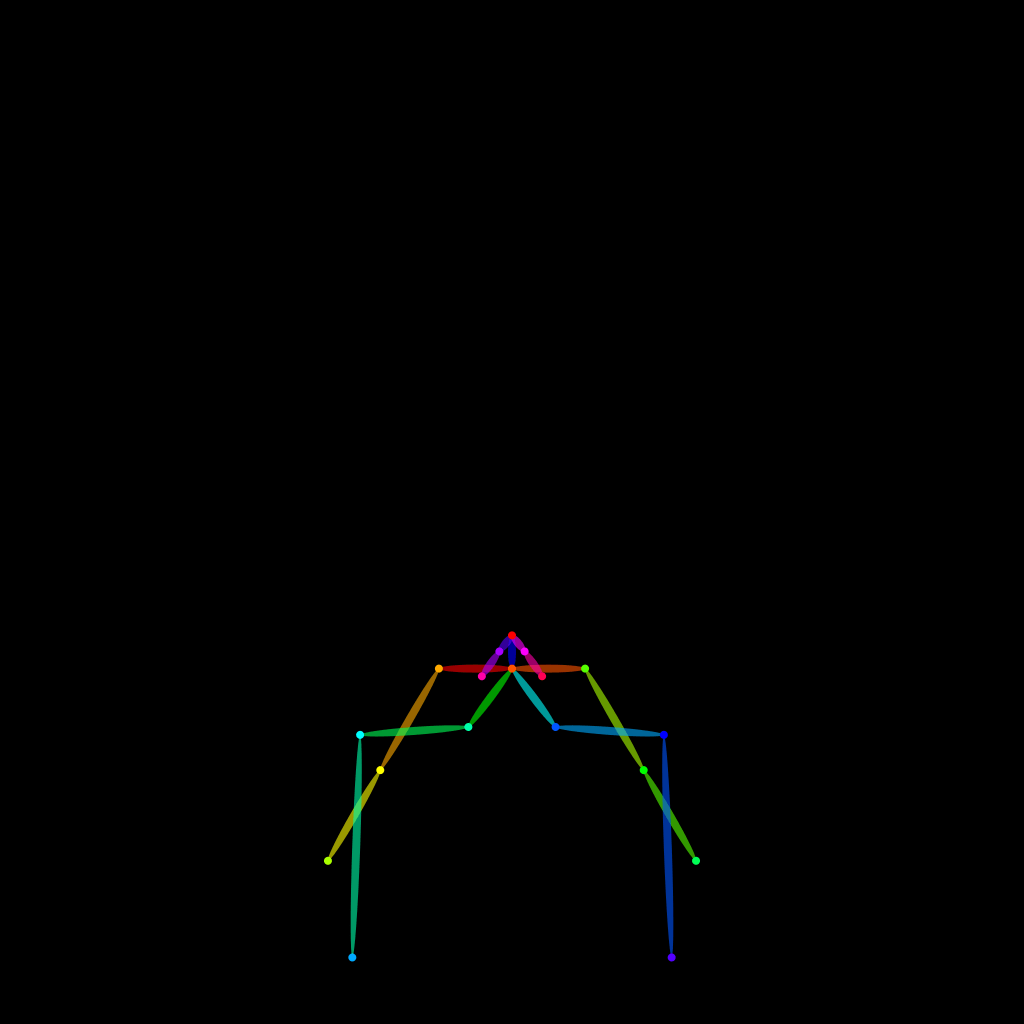
OpenPose skeleton for ControlNet
Load the PNG into a ControlNet OpenPose unit (preprocessor: none), or import the JSON into an OpenPose editor.
Have a photo of the pose you want?
Upload it to Photo to Pose. We detect the pose in your browser and put it on the mannequin, ready to adjust.