Prone Chin RestPose Reference
Camera angles
Prone Chin Rest rests the wooden torso low on its front, lifting the head between bent arms while both lower legs rise behind.
Tags: lyingfigure drawingfull bodypronechin in hands
How to draw the Prone Chin Rest pose
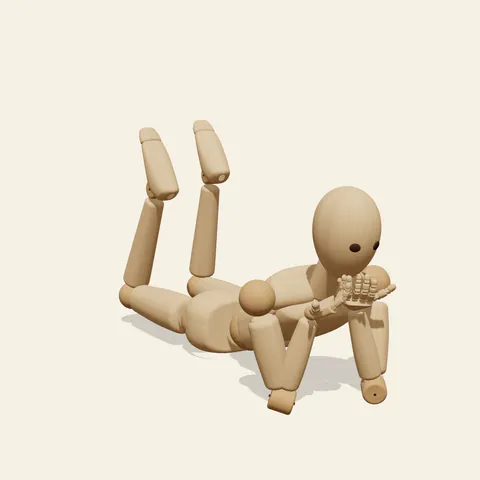
three-quarter view 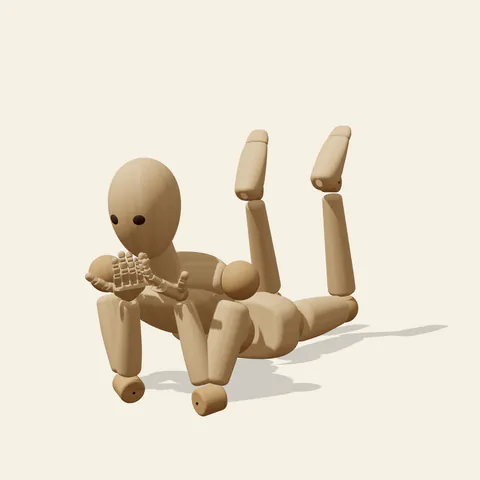
side view 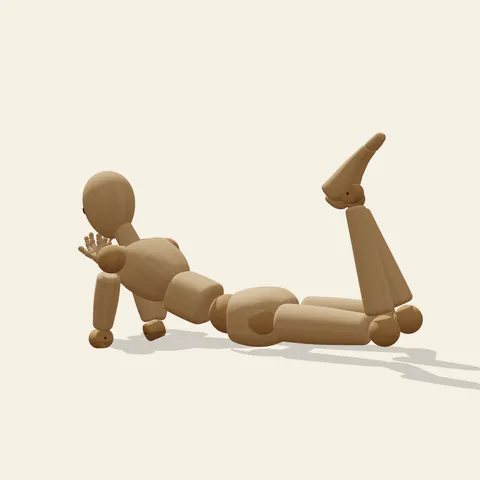
back view 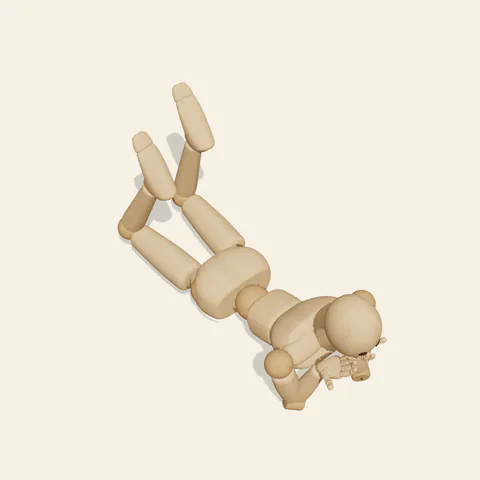
high-angle view
The body stretches horizontally from the chest through the hips, but the bent knees send the feet upward and interrupt that long line. At the other end, the elbows stay low while the forearms angle toward the chin. These raised endpoints frame a comparatively quiet middle. The head sits above the hands instead of dropping toward the ground, giving the gesture an attentive quality. Observe how the knees act as hinges: the thighs continue backward near the torso's level, then the lower legs turn up. Confusing those two sections is the quickest way to lose the prone arrangement.
Block the chest and pelvis as neighboring low volumes before placing the head. The elbows form a small support base in front of the chest, and their distance from one another affects how clearly the two hands can be seen. A side angle explains the lifted calves, while a front three quarter view shows the paired forearms framing the face. Looking from behind helps check that both raised feet belong to distinct shins. The wooden rig indicates approximate chin support with simplified palms, not detailed fingers pressing into cheeks. Likewise, its rigid torso cannot reproduce every soft contact of a person lying on a surface.
More on angles and common mistakes
Do not raise the pelvis merely to make room for the folded legs; that would change the overall action. Avoid drawing the feet as if they attached directly to the backs of the thighs. This reference suits reading or daydreaming scenes with imagined props, playful resting gestures and horizontal composition studies; no book is present in the reference itself. Choose Edit this pose and lower one foot slightly by opening its knee angle. The unequal leg heights make the silhouette more casual. Check the rear view after the adjustment so the two calves remain separate rather than merging into one ambiguous upright shape.
Free to use (CC0). The pose images on this page are released under CC0 1.0 (public domain dedication). Use them for drawing practice, commercial illustration, reference sheets or AI image generation; no attribution is required. A credit to PoseMaker is appreciated but optional.
Prone Chin Rest pose prompt
Copy a prompt for your AI image generator. Pair it with the OpenPose skeleton in ControlNet so the generated character matches this exact pose.
General prompt
A person lies on their front with elbows low and both hands supporting the chin. Bend both knees so the lower legs and feet lift behind the hips. Keep the head facing forward and show the full horizontal body against a plain background.
Midjourney
full body prone person, chest and hips low, elbows beneath raised head, chin cupped in hands, knees bent, calves lifted behind, feet upward, attentive forward gaze, plain studio background --ar 3:2 --style raw
Stable Diffusion
1person, full body, prone, lying on stomach, chin in hands, elbows down, forearms raised, head lifted, bent knees, raised calves, feet upward, side three quarter view, horizontal figure, visible feet, blank background, relaxed gesture, clear limb separation
Negative prompt
lying on back, straight flat legs, elevated pelvis, feet attached to thighs, elbows floating, hands covering entire face, extra feet, missing forearms, fused calves, broken knees, cropped body, book
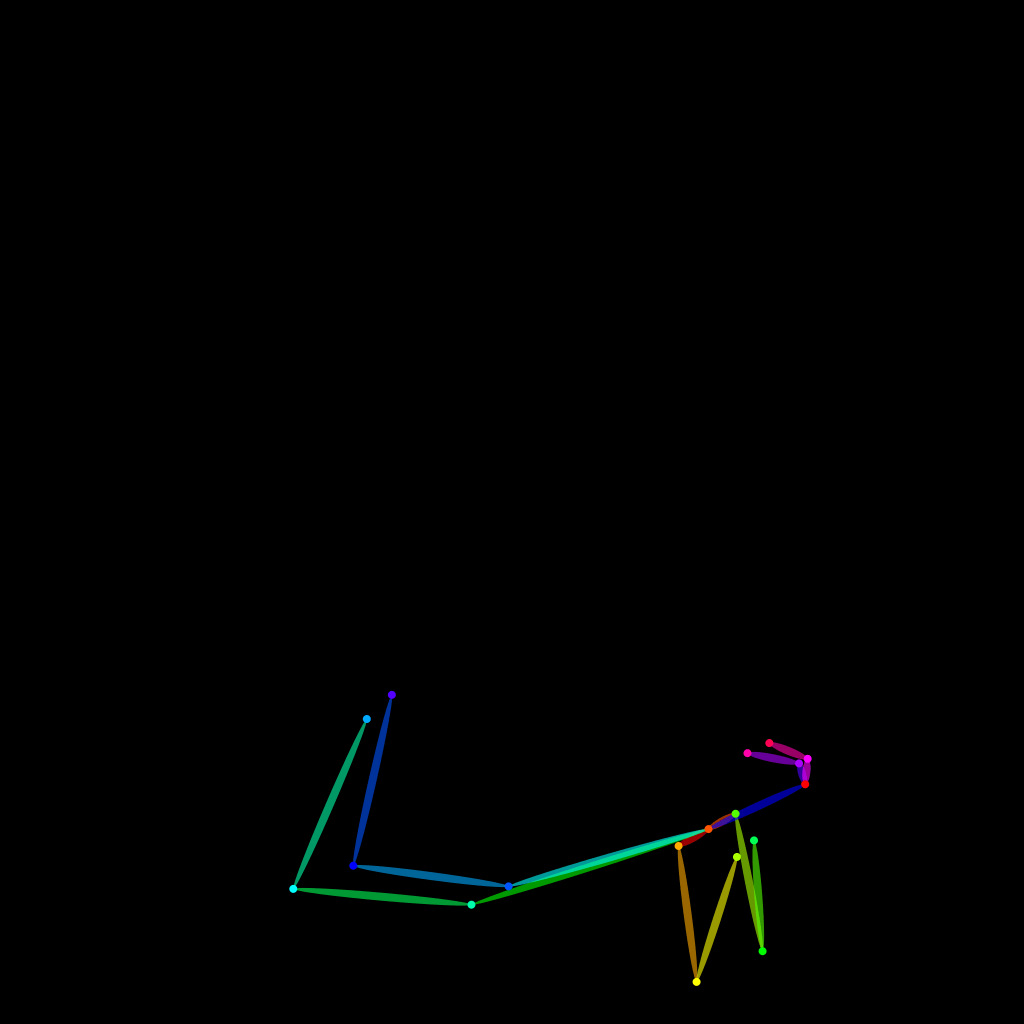
OpenPose skeleton for ControlNet
Load the PNG into a ControlNet OpenPose unit (preprocessor: none), or import the JSON into an OpenPose editor.
Have a photo of the pose you want?
Upload it to Photo to Pose. We detect the pose in your browser and put it on the mannequin, ready to adjust.