Hands-Behind ReclinePose Reference
Camera angles
Reclining Hands Behind Head spreads the wooden elbows around a relaxed head, with one knee lifted above a longer diagonal leg.
Tags: lyingfigure drawingfull bodyreclininghands behind head
How to draw the Hands-Behind Recline pose
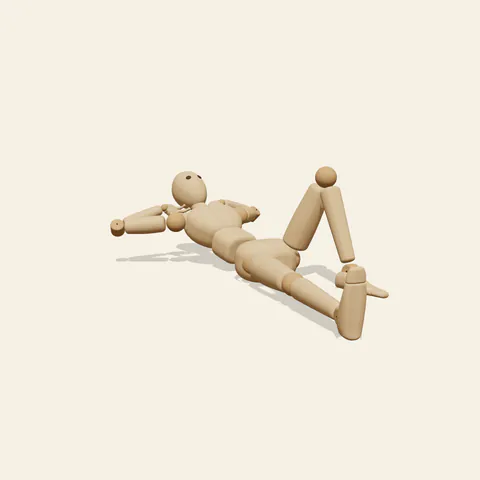
three-quarter view 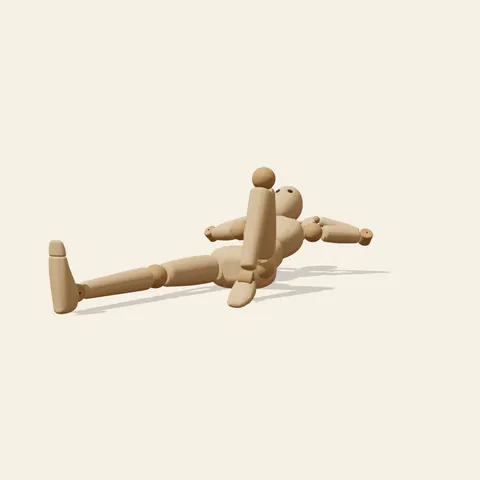
side view 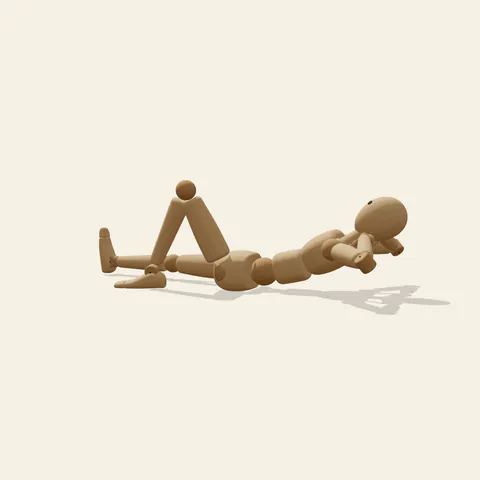
back view 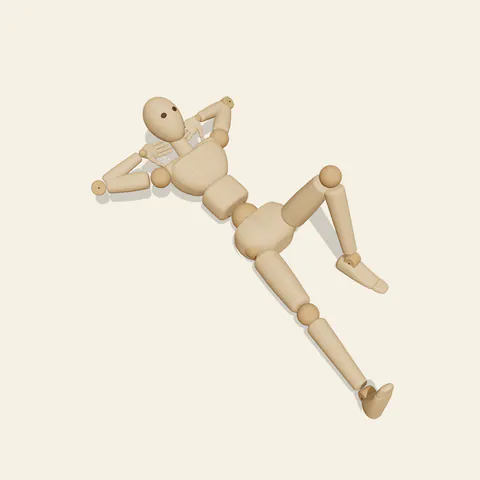
high-angle view
The torso reclines rather than sitting vertically, and both bent arms return toward the back of the head. Wide elbows create a horizontal accent near the shoulders. Below the pelvis, the legs deliberately differ: one knee rises, while its partner extends farther along the groundward diagonal. This asymmetry keeps the figure from looking like a flat, perfectly mirrored rest pose. Trace the long path from the extended foot through the hip and chest, then compare it with the shorter, steeper route through the raised knee. The two routes establish the essential rhythm before any joint details are added.
For construction, locate the pelvis first and determine how much of the torso is lifted relative to it. A side angle separates a true recline from an upright seat disguised by the arm position. Front three quarter views help clarify which thigh reaches the elevated knee and which continues toward the long leg. Rear views can expose the hidden forearms near the skull. The wooden mannequin offers approximate head-side hand placement, so the reference does not promise intertwined fingers or a specific pressure relationship between palms and neck. No pillow, lounger or other supporting object is included; add one only as a separate drawing decision.
More on angles and common mistakes
Watch for an extended leg that becomes too short because its foot appears near the edge of the image. Follow its full chain through the knee before committing to the outline. Another pitfall is tucking the elbows inward until the upper gesture loses its open character. This reference can support relaxed character scenes, foreshortened torso practice and long diagonal compositions. In Edit this pose, lower the raised knee slightly without changing the hands. The figure will read as more stretched out while retaining the recognizable head framing. Check the profile to ensure the altered foot remains sensibly related to the implied ground plane.
Free to use (CC0). The pose images on this page are released under CC0 1.0 (public domain dedication). Use them for drawing practice, commercial illustration, reference sheets or AI image generation; no attribution is required. A credit to PoseMaker is appreciated but optional.
Hands-Behind Recline pose prompt
Copy a prompt for your AI image generator. Pair it with the OpenPose skeleton in ControlNet so the generated character matches this exact pose.
General prompt
A person reclines with both hands behind the head and elbows spread. One knee bends upward while the opposite leg extends farther along the ground. Keep the torso relaxed, the head supported near the hands and the whole body visible on a plain background.
Midjourney
full body reclining person, hands behind head, elbows spread wide, torso leaning back, one knee raised, opposite leg extended diagonally, relaxed head angle, clear horizontal silhouette, empty backdrop --ar 3:2 --style raw
Stable Diffusion
1person, full body, reclining, hands behind head, wide elbows, backward torso, one knee raised, one leg extended, asymmetric legs, relaxed head, side three quarter view, diagonal silhouette, visible feet, floor-level pose, plain backdrop, clear arm shapes, natural joints
Negative prompt
upright seated torso, both knees raised, both legs straight, narrow tucked elbows, hands in front of face, shortened long leg, extra knees, fused arms, missing feet, broken neck, cropped toes, pillow
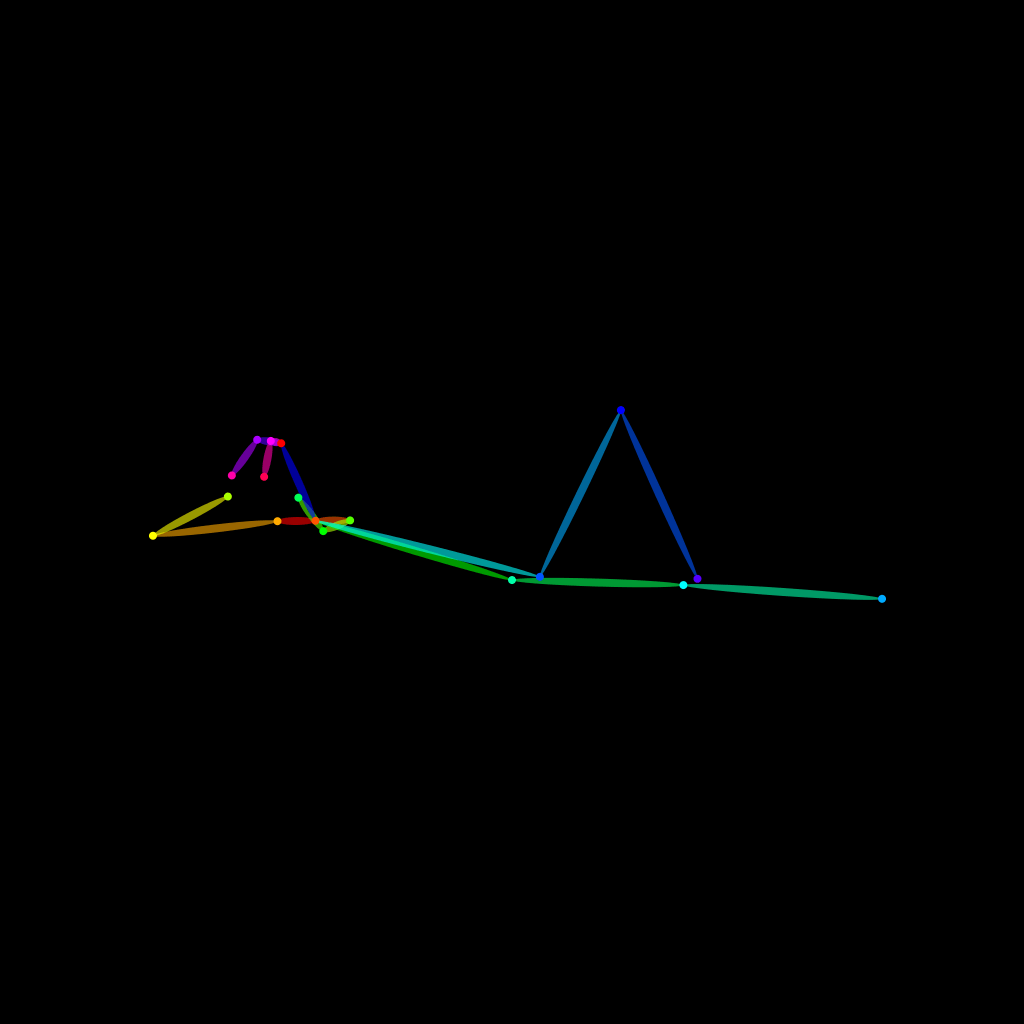
OpenPose skeleton for ControlNet
Load the PNG into a ControlNet OpenPose unit (preprocessor: none), or import the JSON into an OpenPose editor.
Have a photo of the pose you want?
Upload it to Photo to Pose. We detect the pose in your browser and put it on the mannequin, ready to adjust.