Hands-on-Knees LeanPose Reference
Camera angles
Leaning Forward Hands on Knees hinges the wooden torso over bent legs, forming a supported diagonal from the shoulders toward the thighs.
Tags: standingfigure drawingfull bodyleaning forwardhands on knees
How to draw the Hands-on-Knees Lean pose
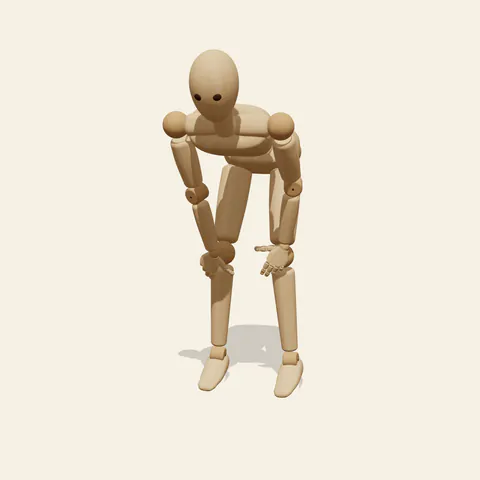
three-quarter view 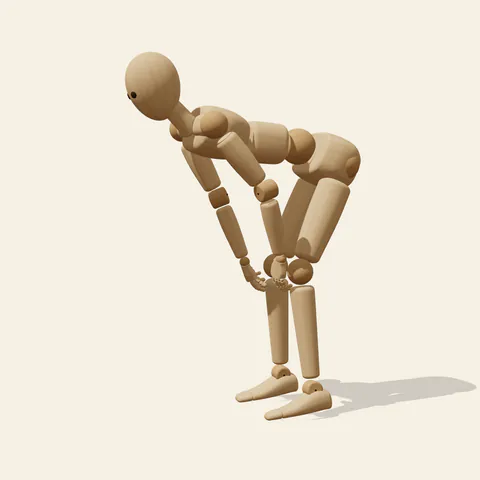
side view 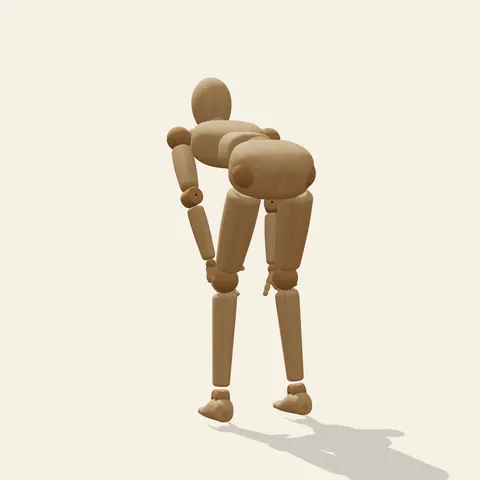
back view 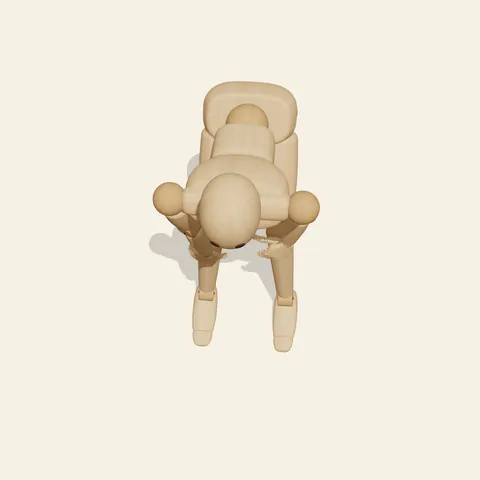
high-angle view
The pelvis stays relatively high while the chest travels forward. Both arms descend toward the knees, giving the gesture two short supporting diagonals instead of a hanging reach to the floor. The knees bend enough to receive the hands, and the head remains more lifted than it would in a full forward fold. Look at the silhouette as an angular bridge: hips at the back, shoulders farther forward, hands returning toward the legs below. The hips and rib cage remain separate volumes even where the compressed front waist nearly disappears from a particular viewing angle.
A side study explains this pose more efficiently than a front view alone. It reveals the hip hinge, the amount of knee bend and the position of the head relative to the shoulder line. From the front, compare the two arm paths and avoid making the wrists converge into one indistinct shape. A rear three quarter angle helps locate the pelvis above the heels and clarifies how the thighs leave their sockets. Because this is a wooden drawing figure, the hands communicate approximate contact near the knees rather than showing exact finger spread, cloth tension or pressure through a living joint.
More on angles and common mistakes
One frequent mistake is to bow the spine dramatically while leaving the pelvis upright, which changes a forward hinge into a rounded collapse. Another is placing the knees behind the ankles without accounting for the backward displacement of the hips. This reference can inform attentive leaning characters, breath-catching scenes and studies of torso compression. Select Edit this pose and lift the head slightly while preserving the chest angle. The result reads as more alert without undoing the overall lean. Then check a profile so the neck does not bend backward excessively, and confirm that each hand still meets its intended knee area after any shoulder adjustment.
Free to use (CC0). The pose images on this page are released under CC0 1.0 (public domain dedication). Use them for drawing practice, commercial illustration, reference sheets or AI image generation; no attribution is required. A credit to PoseMaker is appreciated but optional.
Hands-on-Knees Lean pose prompt
Copy a prompt for your AI image generator. Pair it with the OpenPose skeleton in ControlNet so the generated character matches this exact pose.
General prompt
A full-length person leans forward from the hips with both knees slightly bent and both hands resting near the knees. Keep the pelvis back, the chest angled forward and the head lifted enough to look ahead. Use a plain background.
Midjourney
full body person leaning forward, hip hinge, bent knees, hands on knees, pelvis set back, diagonal torso, head looking ahead, supported upper body, side three quarter view, empty backdrop --ar 2:3 --style raw
Stable Diffusion
1person, full body, leaning forward, hands on knees, hip hinge, bent knees, pelvis back, diagonal chest, head lifted, grounded feet, side three quarter view, downward arms, supported gesture, visible hands, simple background, natural spine, readable silhouette
Negative prompt
hands on floor, straight locked knees, fully rounded collapse, upright pelvis, floating palms, backward knee joints, extra hands, duplicated legs, broken neck, missing feet, cropped head, furniture
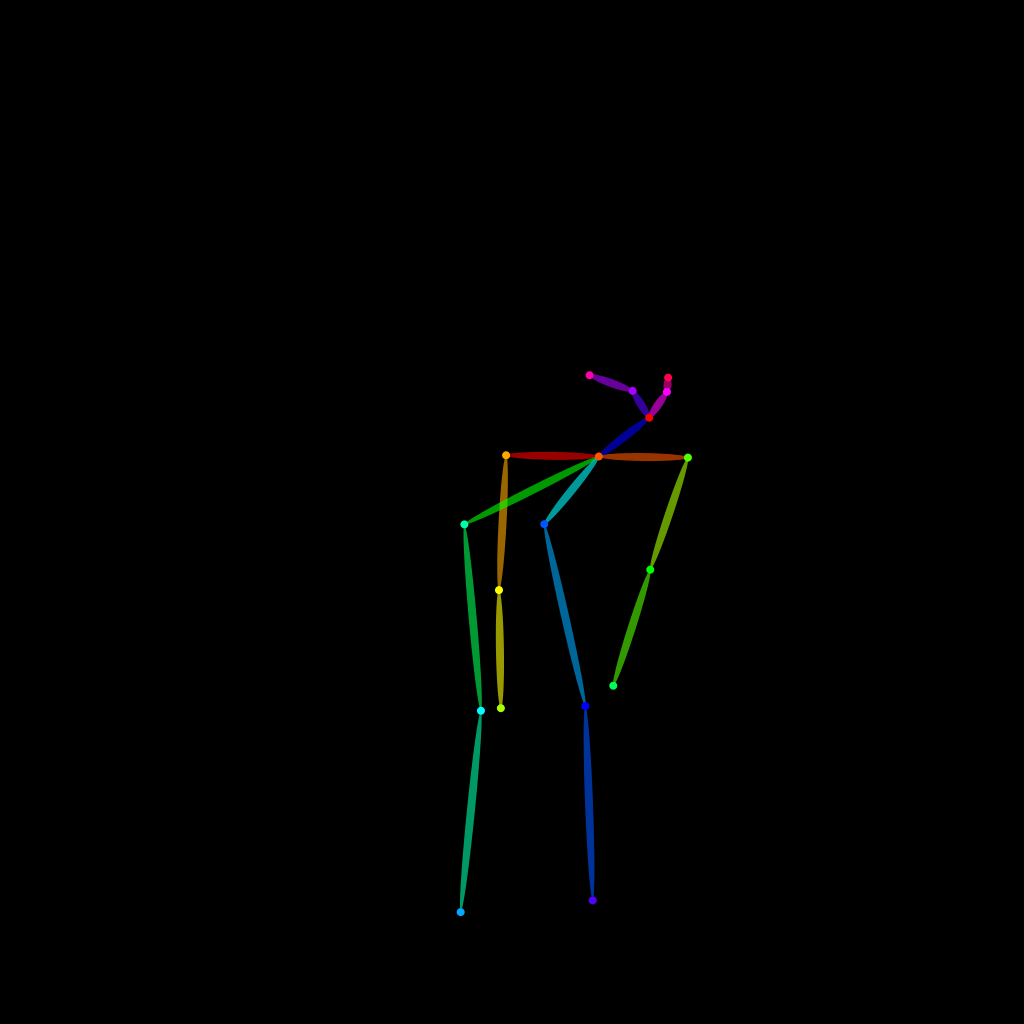
OpenPose skeleton for ControlNet
Load the PNG into a ControlNet OpenPose unit (preprocessor: none), or import the JSON into an OpenPose editor.
Have a photo of the pose you want?
Upload it to Photo to Pose. We detect the pose in your browser and put it on the mannequin, ready to adjust.