Kneeling Lean BackPose Reference
Camera angles
Kneeling Lean Back curves the body backward from the knees, the face turned up to the ceiling and both hands resting on the thighs near the knees.
Tags: kneelingfigure drawingfull bodyleaning backlooking up
How to draw the Kneeling Lean Back pose
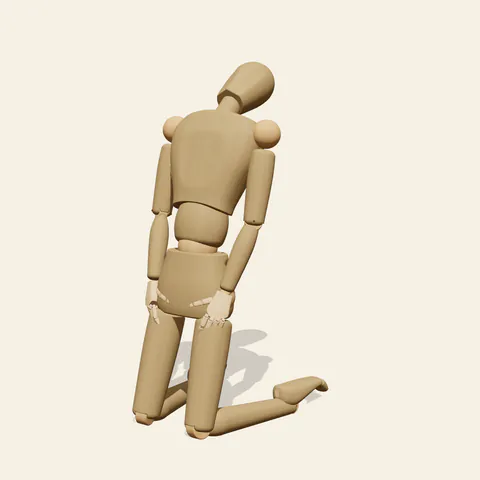
three-quarter view 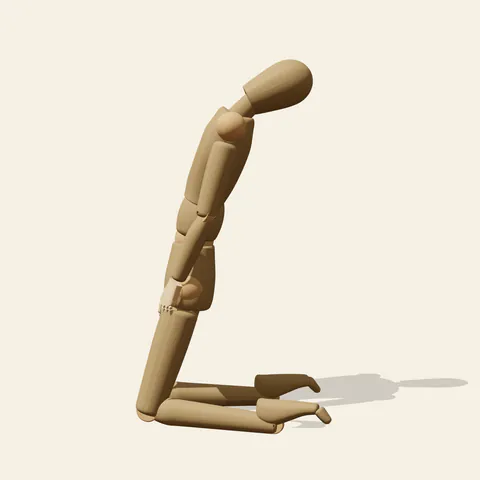
side view 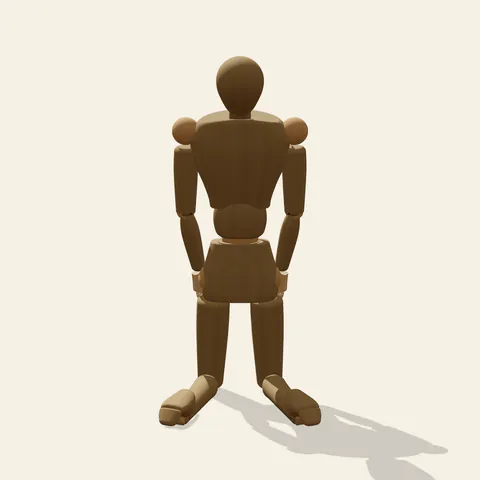
back view 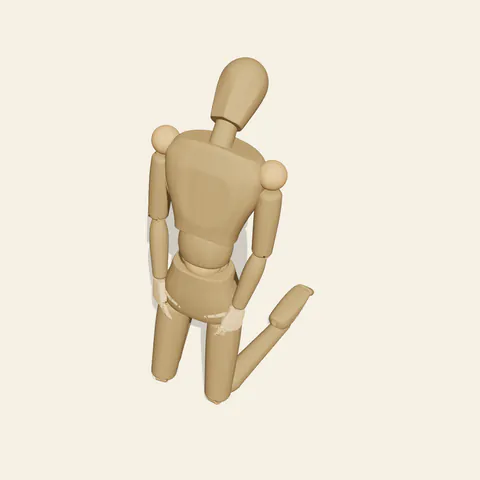
high-angle view
The hips sit a little behind the knees, so each thigh slants back from its kneecap instead of standing upright. The torso keeps going in that direction, the neck tips far back and the face ends up pointing at the ceiling. The result is one long curve that starts at the knees, runs through the belly and chest and finishes under the chin. Both arms follow the front of the thighs downward, the hands lying near the knees where they act as light reminders of the leg line rather than as supports. Weight stays over the shins; with a centre of mass about 55 cm high, the slanted thighs counterbalance the leaning chest.
Make the side view, from the figure's left, your master drawing, because it is the only angle where the whole arc reads as a single stroke. From the front the face vanishes: you see the underside of the jaw, the throat as a column and the top of the head foreshortened behind it. The high angle is the opposite case and gives the most readable face, turned up toward the camera. A low viewpoint enlarges the chin and the knees. In the back view the head drops behind the shoulders and only its crown shows above them.
More on angles and common mistakes
Common mistakes are breaking the curve into a vertical torso plus a sharply bent neck, folding at the waist, and letting the hips slide down onto the heels. Keep the bend shared between lower back, upper back and neck. This kneeling leaning back pose suits moments of relief or exhaustion, feeling imagined rain, looking up at a sky or ceiling, and expressive dance studies. Nothing overhead is shown; whatever the figure looks at is for you to invent.
Edit this pose: reduce the neck bend until the face aims at a point just above the viewer, which turns open release into hopeful attention while keeping the arc through the torso intact.
Free to use (CC0). The pose images on this page are released under CC0 1.0 (public domain dedication). Use them for drawing practice, commercial illustration, reference sheets or AI image generation; no attribution is required. A credit to PoseMaker is appreciated but optional.
Kneeling Lean Back pose prompt
Copy a prompt for your AI image generator. Pair it with the OpenPose skeleton in ControlNet so the generated character matches this exact pose.
General prompt
A person kneels on both knees with the hips slightly behind the knees, the torso leaning back in one long curve and the head tipped far back so the face points at the ceiling. Arms hang along the front of the thighs, hands near the knees, plain background.
Midjourney
full body person kneeling, leaning back in a long backward curve, head tipped back, face toward ceiling, arms along thighs, hands near knees, shins flat on floor, side view, plain background --ar 2:3 --style raw
Stable Diffusion
1person, full body, kneeling, leaning back, head back, looking up, face up, arched torso, backward curve, arms down, hands on thighs, shins on floor, pointed feet, side view, from side, emotional pose, plain background, simple background
Negative prompt
upright torso, bent at waist, sitting on heels, head facing forward, hands on floor, arms raised, leaning forward, broken neck, twisted spine, extra limbs, extra fingers, bad anatomy, cropped head, cropped feet
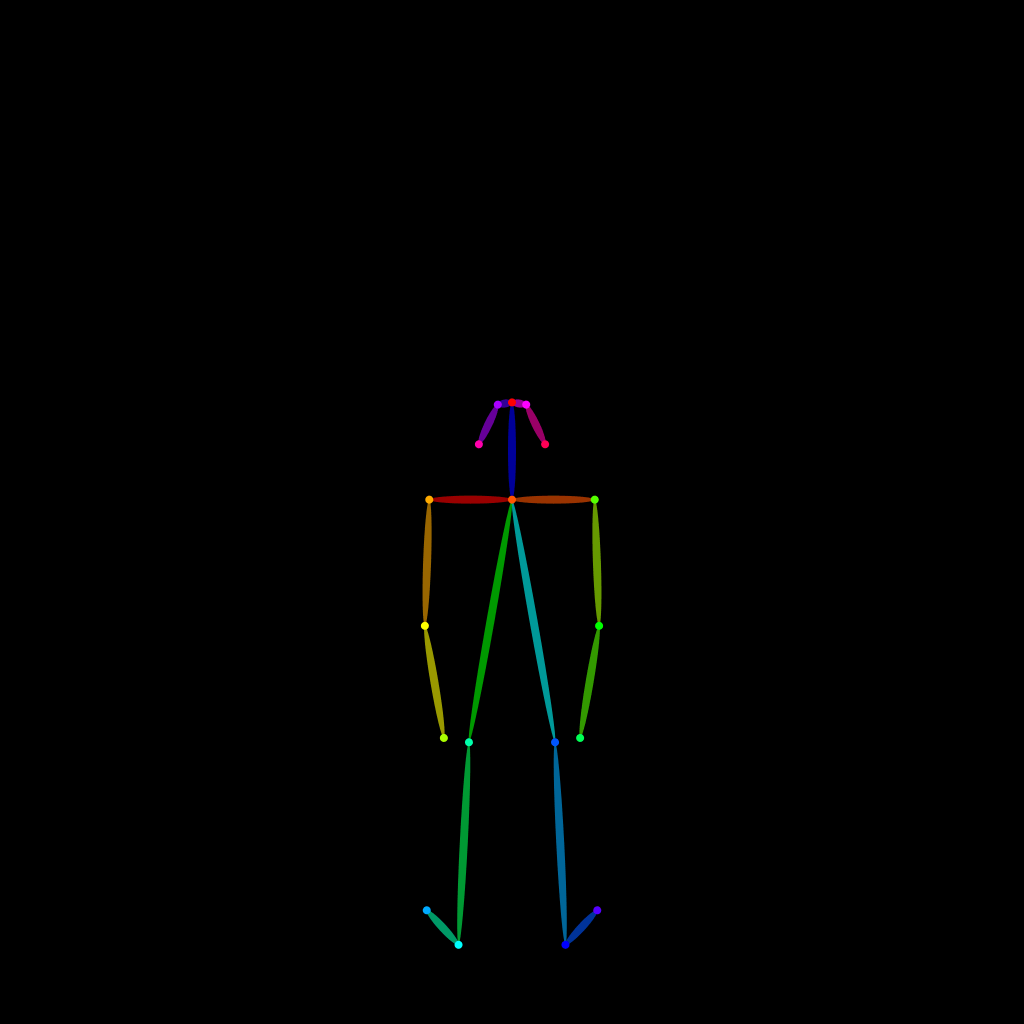
OpenPose skeleton for ControlNet
Load the PNG into a ControlNet OpenPose unit (preprocessor: none), or import the JSON into an OpenPose editor.
Have a photo of the pose you want?
Upload it to Photo to Pose. We detect the pose in your browser and put it on the mannequin, ready to adjust.