Hand on Head Back ViewPose Reference
Camera angles
Back View Hand on Head frames the wooden mannequin's rear silhouette with one lifted elbow, a shifted hip and a diagonally extended leg.
Tags: standingfigure drawingfull bodyback viewhand on head
How to draw the Hand on Head Back View pose
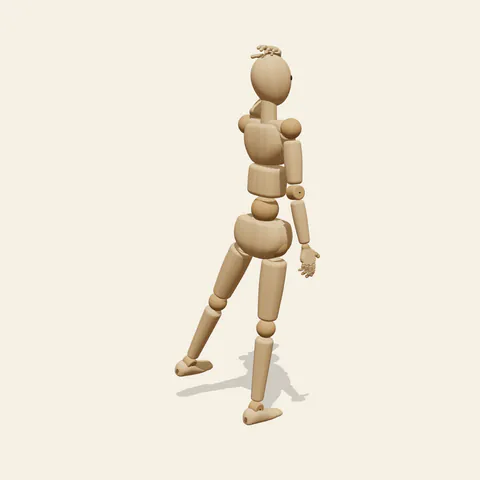
three-quarter view 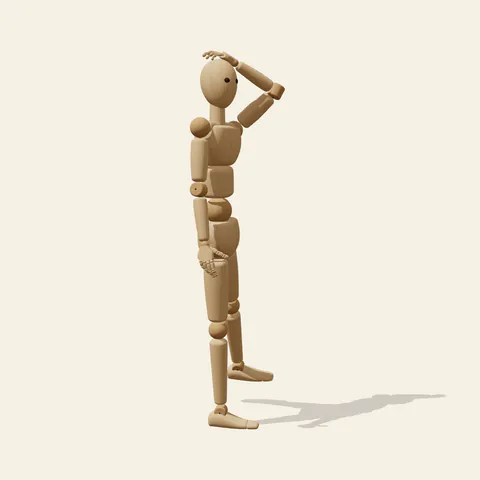
side view 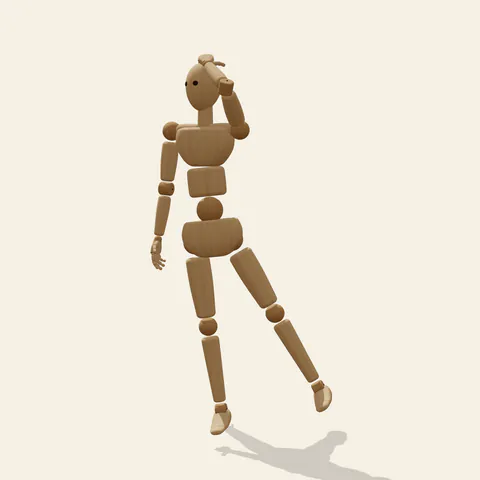
back view 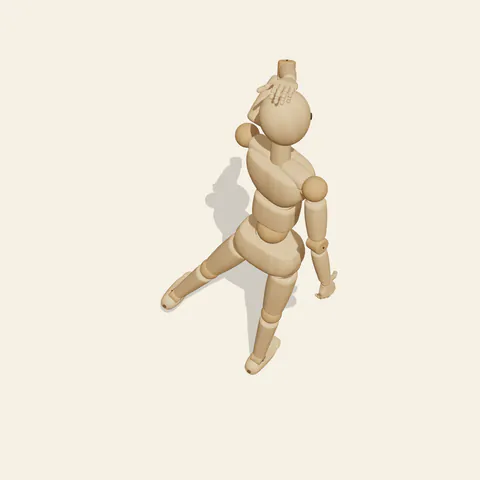
high-angle view
Viewed from behind, the raised arm creates a clear opening above the shoulder while the other arm follows the outside of the torso. The pelvis moves to one side and one leg reaches away from the more upright supporting leg. These offsets produce a broad curve through the back rather than a symmetrical rear elevation. Pay attention to the distance between the lowered wrist and the outer thigh: that small separation helps the arm remain readable. The hand near the crown sets a high endpoint for the gesture without requiring the head to turn toward the viewer.
For a useful construction drawing, establish the shoulder line and the top of the pelvis independently. The spine connects two angled masses; it should not be drawn as a ruler-straight seam dividing a mirror image. A rear view is best for the overall asymmetry, while the side reveals how the raised forearm approaches the head. From a three quarter direction, notice which edge of the rib cage becomes visible beyond the waist. The wooden mannequin has intentionally simplified surfaces and joints, so its back is a guide to large volumes rather than a map of individual shoulder blade muscles or skin folds.
More on angles and common mistakes
Do not let the long outward leg pull its hip socket downward until the pelvis seems broken. Also check that the low hand belongs to an arm of plausible length, especially when perspective places it near the knee. This reference is useful for rear character studies, turning-away compositions and comparing hip shifts without facial cues. Use Edit this pose to bring the extended leg inward a few degrees while keeping the pelvis offset. The stance becomes less expansive but keeps its distinctive rear curve. Revisit both side views afterward to make sure the foot placement still supports the imagined weight line rather than leaving the figure poised beyond its base.
Free to use (CC0). The pose images on this page are released under CC0 1.0 (public domain dedication). Use them for drawing practice, commercial illustration, reference sheets or AI image generation; no attribution is required. A credit to PoseMaker is appreciated but optional.
Hand on Head Back View pose prompt
Copy a prompt for your AI image generator. Pair it with the OpenPose skeleton in ControlNet so the generated character matches this exact pose.
General prompt
A person stands with their back to the viewer, one hand resting above the head and the other arm hanging beside the body. Shift the hips and extend one leg diagonally outward. Show the complete figure against a simple background.
Midjourney
full body rear view person, hand on crown, lifted elbow, opposite arm hanging, shifted pelvis, one leg angled outward, uneven shoulders, head turned away, uncluttered studio background --ar 2:3 --style raw
Stable Diffusion
1person, full body, back view, hand on head, raised elbow, lowered opposite arm, hip shift, diagonal leg, standing balance, uneven shoulders, rear three quarter view, head away, visible feet, figure study, plain background, long silhouette, soft shadows
Negative prompt
front facing chest, both hands raised, crossed feet, centered rigid hips, forearm through skull, displaced hip socket, extra shoulders, missing hands, fused legs, broken ankles, cropped toes, patterned backdrop
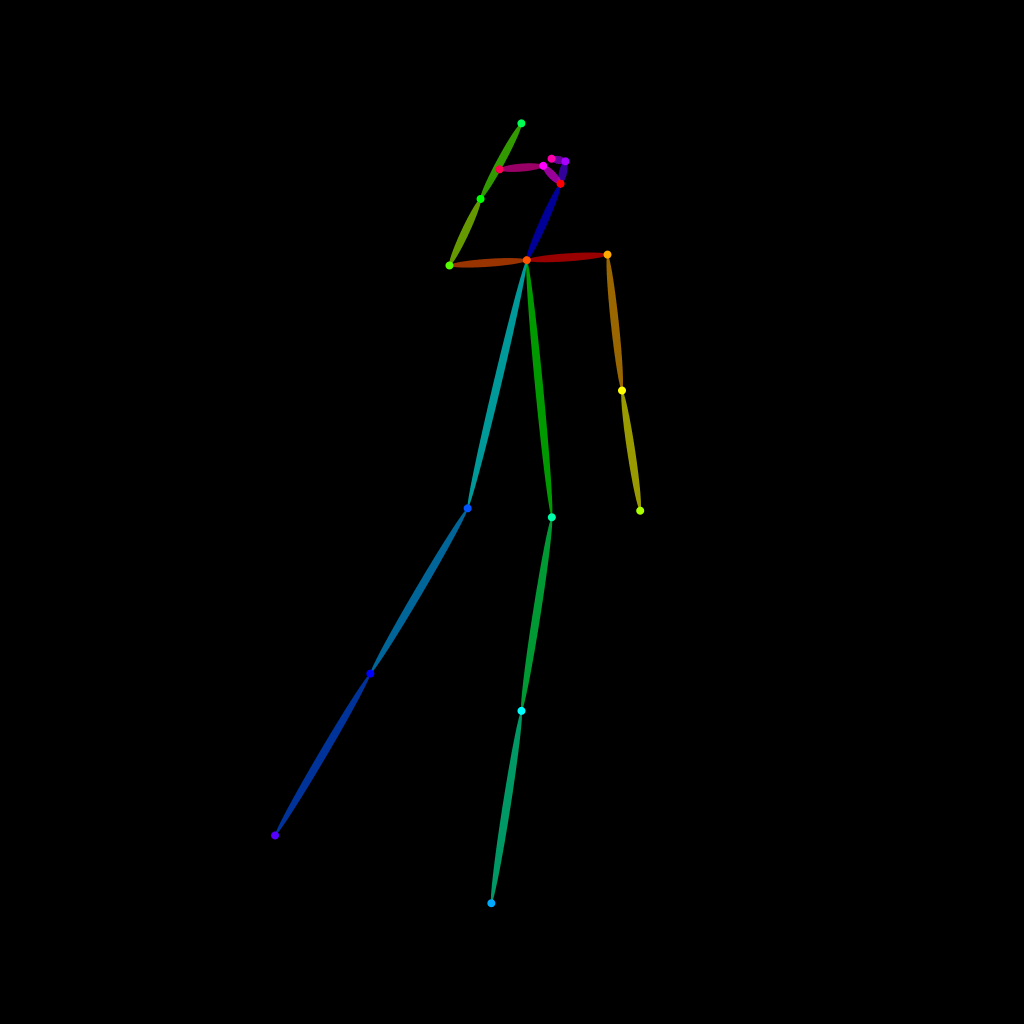
OpenPose skeleton for ControlNet
Load the PNG into a ControlNet OpenPose unit (preprocessor: none), or import the JSON into an OpenPose editor.
Have a photo of the pose you want?
Upload it to Photo to Pose. We detect the pose in your browser and put it on the mannequin, ready to adjust.