Hands on Wall LeanPose Reference
Camera angles
Hands on Wall Lean plants straight legs apart, sends the hips back over the heels and tips the torso forward so both arms press flat palms on a wall.
Tags: leaning forwardfigure drawingfull bodyhands on wallstanding
How to draw the Hands on Wall Lean pose
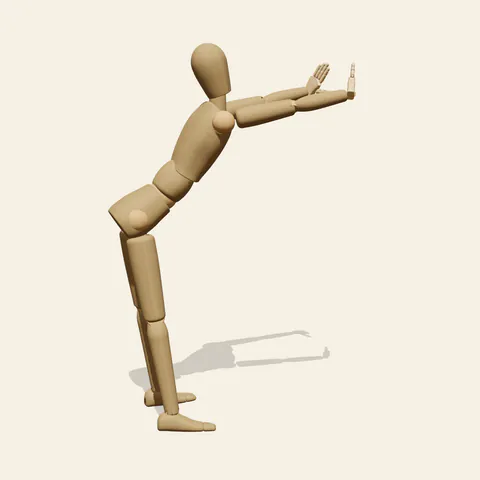
three-quarter view 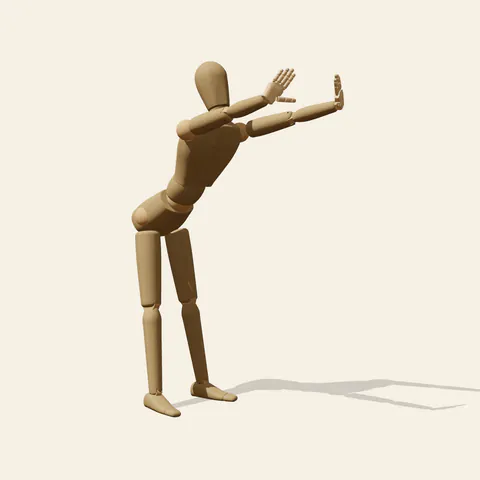
side view 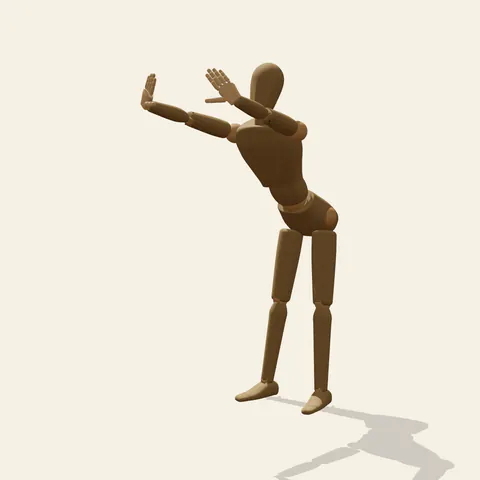
back view 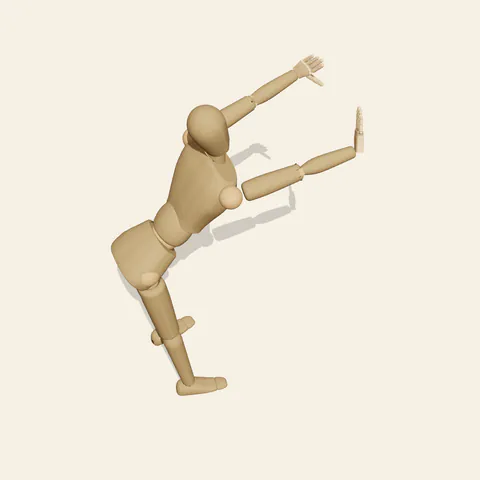
high-angle view
The legs stay straight and a little wider than the hips, rising vertically from ankle to hip. From there the body hinges at the hip joints, and the torso tilts forward to roughly forty-five degrees above horizontal. Both arms reach ahead at about shoulder height with the palms flat on an imagined wall; the wall is not part of the model, so place it yourself about an arm's length in front of the head. The lower back arches instead of rounding, and the head lifts to look along the arms toward the hands, keeping the neck in line with the upper spine. Weight is shared between the feet and the hands.
The side view from the figure's left explains the pose fastest: a zigzag of vertical legs, a diagonal torso and arms reaching on toward the hands. In the front view the torso and arms foreshorten heavily, the head sits low between the shoulders and the hands come toward you, so draw the palms larger than feels natural. From behind, the pelvis becomes the nearest and largest form, and the angle of the upper arms has to explain the reach. The high angle is useful for checking that both hands land on the same vertical plane.
More on angles and common mistakes
Many searches for a leaning on wall pose mean a back-to-wall stance; this version faces the wall, which changes everything about where the weight goes. Typical errors are dropping the hands so the figure slides toward a push-up, bending the knees, rounding the back into a hunch, or leaving out the surface so the palms seem to float. Even a single vertical line for the imagined wall fixes that. Good uses include catching breath after effort, bracing against a barrier, shoulder and hamstring stretch illustrations and characters waiting at a closed door.
In Edit this pose, step one foot forward and bend that knee while keeping both arms straight, so the palms stay on the same plane. The lean turns into a calf stretch, and the back leg becomes the long diagonal.
Free to use (CC0). The pose images on this page are released under CC0 1.0 (public domain dedication). Use them for drawing practice, commercial illustration, reference sheets or AI image generation; no attribution is required. A credit to PoseMaker is appreciated but optional.
Hands on Wall Lean pose prompt
Copy a prompt for your AI image generator. Pair it with the OpenPose skeleton in ControlNet so the generated character matches this exact pose.
General prompt
A person stands with straight legs apart, hips pushed back over the heels and torso tipped forward about forty-five degrees. Both straight arms reach ahead at shoulder height, palms flat against a plain wall, lower back arched, head lifted to look along the arms. Full body, side view.
Midjourney
full body person leaning forward with both palms flat on a plain wall, straight legs apart, hips back, torso tilted forward about forty-five degrees, arms straight at shoulder height, arched lower back, head lifted, side view --ar 3:2 --style raw
Stable Diffusion
1person, full body, leaning forward, hands on wall, palms on wall, straight arms, arms forward, straight legs, legs apart, hips back, bent at waist, arched back, head up, side view, plain wall, plain background, stretching
Negative prompt
back against wall, leaning back, bent knees, push-up, kneeling, rounded back, head down, floating hands, arms at sides, nsfw, extra arms, extra legs, fused fingers, bad anatomy, cropped hands
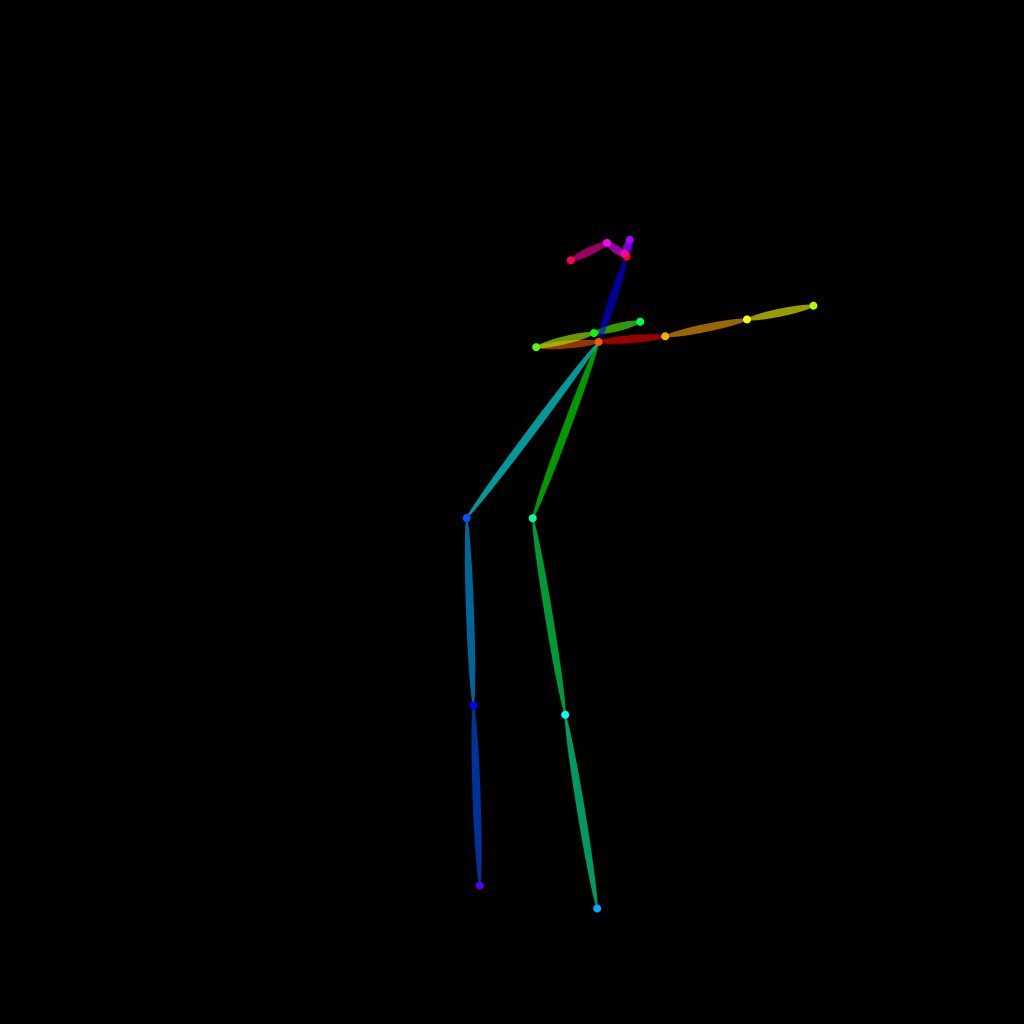
OpenPose skeleton for ControlNet
Load the PNG into a ControlNet OpenPose unit (preprocessor: none), or import the JSON into an OpenPose editor.
Have a photo of the pose you want?
Upload it to Photo to Pose. We detect the pose in your browser and put it on the mannequin, ready to adjust.